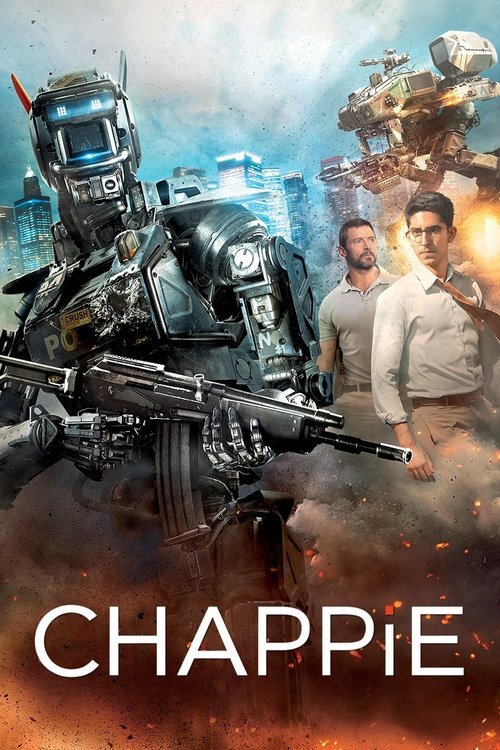
Chappie
Plot
Every child comes into the world full of promise, and none more so than Chappie: he is gifted, special, a prodigy. Like any child, Chappie will come under the influence of his surroundings—some good, some bad—and he will rely on his heart and soul to find his way in the world and become his own man. But there's one thing that makes Chappie different from any one else: he is a robot.
Get the Weekly Woke Watchlist
New and trending movies scored for woke bias, preachy messaging, and forced political themes — before you waste your evening.
No spam. One useful email per week.
Overall Series Review
Categorical Breakdown
The film contrasts the primary villain, a white male ex-soldier, who is portrayed as a single-minded, envious, and ultimately destructive force, with the protagonist's maker, a non-white scientist, who is intellectual and benevolent. This dynamic vilifies a traditional archetype of white male authority and aggression. However, the core plot revolves around the merit and moral development of the robot's consciousness, not the immutable characteristics of the human characters, preventing a higher score.
The central institutional power, the corporation Tetravaal, and its technology are depicted as cold, profit-driven, and capable of unleashing a large, indiscriminate force of destruction (MOOSE) upon the city. The narrative elevates the vibrant, authentic, albeit criminal, street culture of Johannesburg (Zef culture) and its inhabitants, who become Chappie's loving parents, in direct opposition to the sterile and destructive corporate structure. This is a clear critique of a military-industrial element of the West's technological and corporate structures.
The main male antagonist is a toxic figure, emasculated by the rejection of his project by his female CEO boss. The male scientist/creator is portrayed as physically soft and non-aggressive. While the female CEO (Sigourney Weaver) is a powerful 'Girl Boss' figure, the primary female character, Yolandi, is depicted as a nurturing, unconditional 'mommy' figure who provides emotional security to Chappie, thereby celebrating a maternal, complementary role, though in a highly unconventional, sexualized gangster context.
The film's focus is entirely on the robot's coming-of-age and the creation of an unconventional parental unit. There are no notable queer characters, alternative sexualities are not centered, and the plot contains no lecturing on gender ideology or active deconstruction of the nuclear family beyond its substitution with a 'found family' unit for the robot.
The narrative explicitly engages with heavy spiritual and theological themes, as Chappie confronts his mortality and embarks on a quest for the transfer of his consciousness, seeking 'eternal life.' This central dilemma is framed by the robot questioning its 'maker' (Deon) and the concept of a soul. The film treats the spiritual quest for a transcendent existence with dramatic weight, suggesting a higher moral law in the choice between good and bad influences.
Get the Weekly Woke Watchlist
New and trending movies scored for woke bias, preachy messaging, and forced political themes — before you waste your evening.
No spam. One useful email per week.