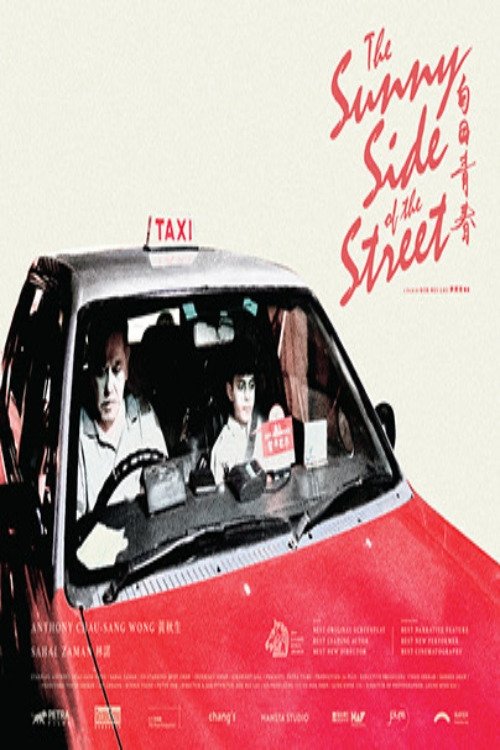
The Sunny Side of the Street
Plot
A confrontation between two Hong Kong immigrants – one a cab driver from Mainland China, the other a lawyer and refugee from Pakistan – spells disaster for their families, especially the lawyer's young son.
Get the Weekly Woke Watchlist
New and trending movies scored for woke bias, preachy messaging, and forced political themes — before you waste your evening.
No spam. One useful email per week.
Overall Series Review
Categorical Breakdown
The core plot is a direct commentary on intersectional hierarchy, specifically pitting two non-white, immigrant/refugee groups against each other and the host society. The narrative explicitly highlights the systemic precarity and ‘invisibility’ of the South Asian ethnic minority/refugee community in Hong Kong. The plot is driven by race and immutable characteristics (refugee/immigrant status and ethnicity) rather than universal meritocracy, as the main conflict exists to expose a social justice issue.
The film acts as a pointed critique of the Hong Kong social and political system, framing the territory as a place where the system is 'stacked against minorities' and the government traps refugees in 'limbo' for a decade. The host society is portrayed as structurally unjust and unwelcoming to newcomers, forcing them into destitution and crime. This narrative deconstructs the national/civic heritage by focusing on its perceived corruption and failures regarding race relations.
The gender dynamics are secondary to the father-son and social critique themes. The central emotional arc focuses on male relationships (Yat and his estranged police son, Yat and the surrogate son Hassan, and the deceased father Ahmed). The female characters, such as Hassan's mother, are present to illustrate the family's struggle but do not drive the main narrative or embody a 'Girl Boss' trope. There is no explicit anti-natalist messaging, but the male-centric focus makes the female experience less vital to the plot's resolution.
The film's entire focus is on the issues of race, class, and refugee status, specifically in the context of male and family relationships. There is no presence of alternative sexual ideologies, gender theory, or centering of LGBTQ+ themes. The relationships and family structures presented are normative.
The conflict is secular, centered on social issues, crime, guilt, and redemption, not on religion. While the Pakistani family is Muslim, and a local NGO mentioned in the cultural context is Christian, neither faith is targeted for hostility. Religion serves as a cultural backdrop (a traditional wedding) but is not portrayed as the root of evil or a source of bigotry. Morality is derived from personal guilt and a search for redemption.
Get the Weekly Woke Watchlist
New and trending movies scored for woke bias, preachy messaging, and forced political themes — before you waste your evening.
No spam. One useful email per week.