Grimm
Season 1 Analysis
Season Overview
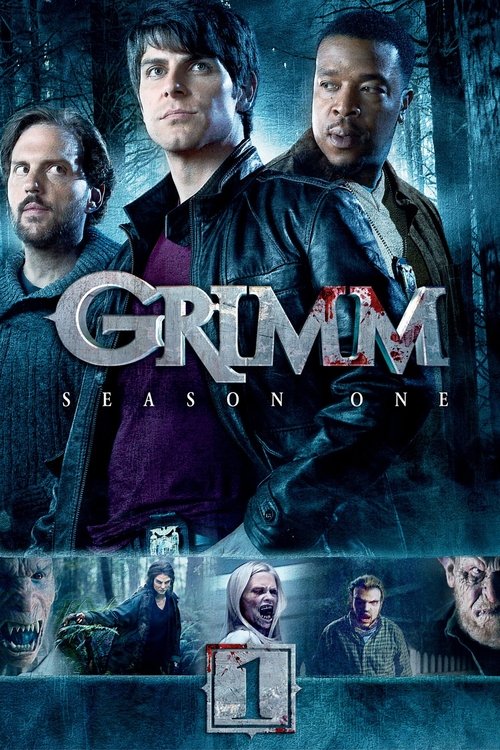
Nick is descended from a line of creature hunters known as Grimms, who have the responsibility to protect the rest of mankind from the creatures who are known as Wesen. Aunt Marie also tells him that the trailer she brought contains information and equipment to help him in his task. gives Nick a small antique key and tells him to protect it with his life as "they" want it. With help from Monroe, a Blutbad he met while working on case, and Rosalee Calvert, a Fuchsbau, Nick deals with crimes involving several different types of Wesen ranging from the bear-like Jägerbars to the rat-like Reinigen.
Season Review
Categorical Breakdown
The casting includes people of color in primary heroic roles, such as Nick's partner Hank Griffin and Sergeant Wu, without racial stereotyping or political commentary. The narrative rejects an identity-based conflict (Grimm vs. all Wesen) by having the protagonist choose to judge the mythological creatures (Wesen) based on their individual merit rather than their immutable species, moving the story toward a universal meritocracy ideal. No vilification of 'whiteness' or explicit intersectional hierarchy is present.
The score reflects the central thematic deconstruction of the protagonist's own heritage. Nick's Grimm ancestry is framed as a tradition of 'murdering and butchering' all Wesen, effectively demonizing his ancestors and his ancient European heritage. The protagonist's heroic arc is defined by his choice to renounce this ancestral 'old way' to pursue a 'peaceful coexistence,' positioning the new, modern approach as morally superior to the historical Western tradition.
The gender dynamics are mostly traditional. Female characters, such as Nick's fiancée Juliette, are not immediately involved in the action and are unaware of the supernatural world. Powerful women who wield magical strength, such as the Hexenbiest Adalind, are typically cast as major antagonists and villains. There is no 'Mary Sue' or 'Girl Boss' trope, and the narrative centers on committed male-female relationships with no anti-natalist message.
The season adheres to a normative structure. The main characters are in or pursuing traditional male-female relationships, such as Nick and Juliette, and the developing romance between Monroe and Rosalee. There is a complete absence of overt LGBTQ+ themes, centering of alternative sexualities, or lecturing on gender theory within the plot.
The series is a secular procedural that deals with objective good and evil, with malevolent acts being tied to the supernatural nature of Wesen rather than subjective morality. The concept of transcendent moral law is acknowledged by the consistent pursuit of justice against criminals. A minor element of a Reaper assassin dressed as a priest is present, but there is no overarching narrative vilifying or lecturing against traditional religion, specifically Christianity.