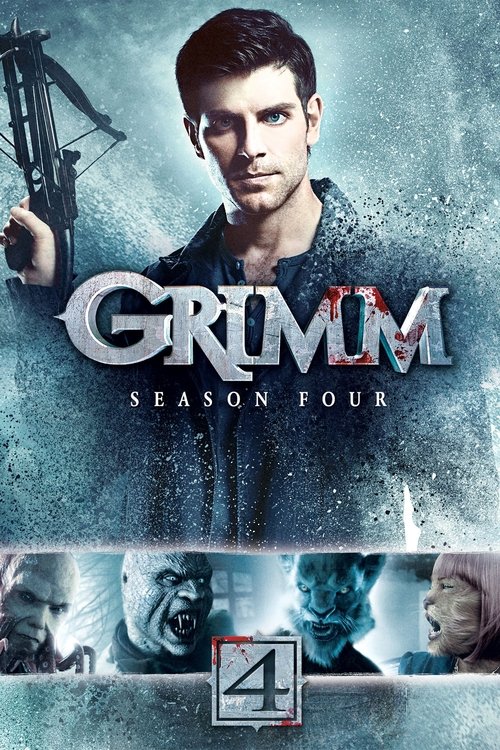
Grimm
Season 4 Analysis
Season Overview
Nick, Juliette, Hank, and Trubel go straight to Nick's home from Monroe and Rosalee's wedding after Trubel tells them that Captain Renard was shot, despite everyone being in shock that Nick has lost his Grimm powers. While Nick is powerless, he uses Trubel in Wesen cases. Nick and Juliette consider living a normal life together instead of Nick trying to get his Grimm powers back, but Juliette tells Nick he needs to get his powers back. Trubel decides Nick doesn't need her as much after he gets his powers back, so she decides to go to Philadelphia with Josh Porter. Monroe is kidnapped to have his fate decided by a tribunal for his marriage to Rosalee, as well as befriending a Grimm. Monroe is found guilty and sentenced to death, but he is saved by Nick and the gang. Soon after Nick gets his powers back, Juliette turns into a Hexenbiest as a side effect. She decides to try to get rid of it instead of telling Nick.
Season Review
Categorical Breakdown
The introduction of the Wesenrein, a pure-Wesen hate group that targets mixed couples like Monroe and Rosalee, uses species-based supremacy as a direct allegory for race and identity-based prejudice. A Wesen symbol is even noted to be analogous to a burning cross. The non-white main characters, Hank and Wu, function as competent police officers and crucial allies in a meritocratic, professional setting. Nick's 'white' male heritage (Grimm) is not vilified but is challenged and temporarily stripped away, which is restored by the end of the season.
Hostility is directed toward the ancient, corrupt power structures of the 'Wesen Council' and the 'Royal Families,' which are positioned as European-style monarchical institutions and oppressive foreign entities. The core Western institutions of law and order (Nick’s police job, the Portland home base) are consistently portrayed as the good forces that act as shields against the chaos caused by both Wesen criminals and ancient nobility. Nick’s Grimm ancestry is respected as a line of protectors.
The score is elevated by the central conflict, which revolves around a woman, Juliette, gaining immense, instant power as a Hexenbiest and using it for destructive, villainous ends fueled by resentment and ego. This challenges the 'Girl Boss' trope by showing female power as fundamentally corrupting and harmful to the male protagonist. However, other strong female characters like Trubel and Rosalee are highly competent and essential to the team. The season also features a complicated focus on motherhood through Adalind's pregnancy with Nick's child.
The narrative focus remains firmly on the complex dynamics of heterosexual relationships (Nick/Juliette, Monroe/Rosalee, and the Nick/Adalind storyline). No significant characters are introduced or centered based on alternative sexualities, and there is no discussion or messaging regarding gender ideology or deconstruction of the nuclear family as a structure.
The show treats its supernatural world of Wesen, Grimms, and ancient lore with a clear sense of objective, transcendent moral law: the Grimm's duty to protect the innocent. There is no overt hostility toward traditional religion. One plotline involves a Wesen that is a direct analogue to a creature from Judeo-Christian folklore, treating faith and belief as sources for mystical reality rather than targets for secular ridicule.