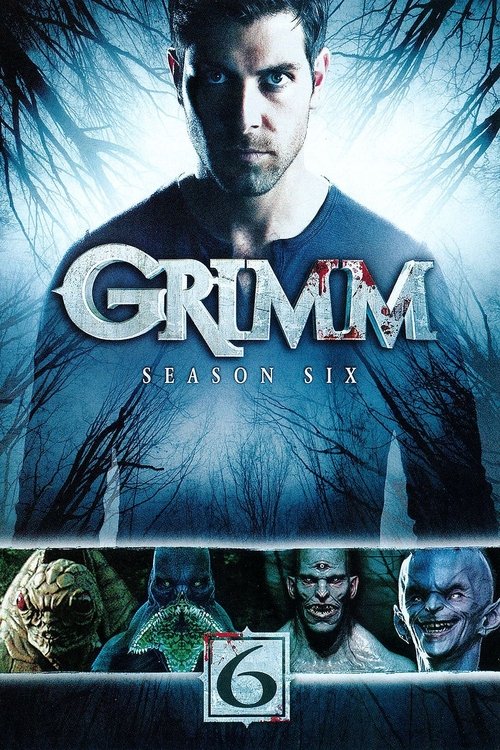
Grimm
Season 6 Analysis
Season Overview
With the arrival of the mysterious and powerful demon Zerstorer, Nick must fight to protect not just his loved ones but all of humanity. Alongside his friends Monroe, Rosalee, and Hank, Nick must also navigate the dangerous politics of the Wesen world, where old grudges and power struggles threaten to tear everything apart. As Zerstorer’s power grows stronger, Nick and his allies travel to different realms and encounter new and dangerous creatures. But with the fate of the world at stake, they cannot afford to fail. Along the way, Nick is forced to make difficult choices and confront the darkest parts of himself, all while keeping his loved ones safe and protecting the innocent. In the climactic final battle, Nick faces off against Zerstorer in an epic showdown that will determine the fate of the world. With everything on the line, Nick and his allies must use all of their strength, courage, and wits to save humanity from destruction.
Season Review
Categorical Breakdown
Character worth is based on their magical lineage (Grimm, Wesen, Hexenbiest) or competence as law enforcement, adhering to universal meritocracy. The final victory is achieved through the strength of the main character's ancestral bloodline and family, which is a heritage-based, not race-based, concept. The diverse cast operates as a functional unit, not a platform for lecturing on systemic oppression or immutable characteristics.
The central conflict is the defense of humanity against a primordial demon, Zerstorer, from another realm. The solution relies on the strength of ancestors and the Grimm lineage, which functions as a traditional institution protecting civilization against chaos. The narrative actively promotes respect for the sacrifices of ancestors and the preservation of one's world.
Female characters like Adalind, Eve, Rosalee, and Trubel are highly competent and powerful, even being credited with collectively injuring the main villain when the male hero struggled. However, this power is shown as complementary to the male lead’s role, not a total emasculation of the men. Motherhood is not framed as a prison; Rosalee's pregnancy with triplets and Adalind’s role as a protective mother are celebrated and viewed as positive, vital aspects of life.
The primary emotional and plot focus is on two traditional, male-female pairings (Nick/Adalind and Monroe/Rosalee) and the resulting nuclear families. The series finale explicitly celebrates the continuity of the nuclear and extended family structures for the next generation. No content centers on alternative sexualities, deconstructs the nuclear family, or engages in gender ideology lecturing.
The core morality is black and white, presenting the conflict as a definitive battle of Good versus Evil, where an ultimate moral law dictates saving humanity from the demon Zerstorer. The show relies on fantasy elements (magic, relics, bloodline power) rather than traditional religion for strength, but it avoids any suggestion that organized religion is the root of evil or that Christian characters are bigots. Morality is objective and transcendent.