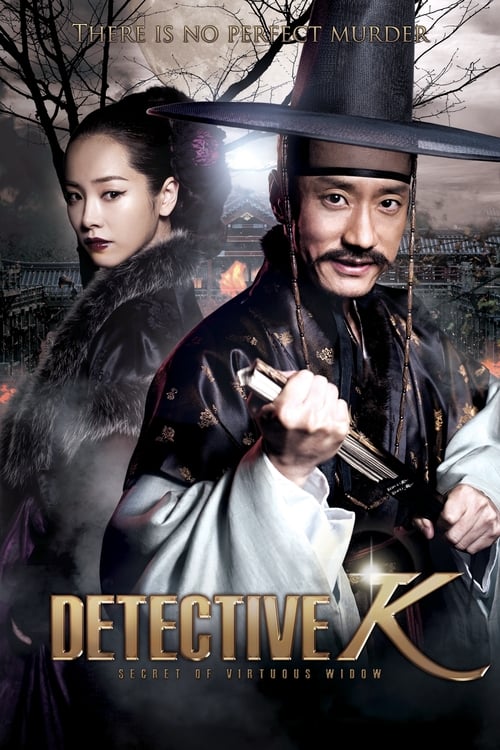
Detective K: Secret of Virtuous Widow
Plot
In 1782, King Jeong-jo of Joseon asks detective K to investigate a series of murders related to a case of corruption within the government.
Get the Weekly Woke Watchlist
New and trending movies scored for woke bias, preachy messaging, and forced political themes — before you waste your evening.
No spam. One useful email per week.
Overall Series Review
Categorical Breakdown
The narrative's central conflict is a universal struggle between good governance and political corruption, exemplified by the villainous Minister Lim. The movie explicitly champions a theme of 'equality among classes' and highlights the moral righteousness of characters who oppose the class hierarchy and slavery. Character value is judged by their moral fiber and competence in the face of injustice, not by an immutable characteristic, though the critique of class oppression serves as a social justice theme.
The plot shows a high degree of Chesterton's Fence, as the King and the protagonist are actively working to preserve the core Joseon institution from a corrupting internal political faction. Corruption and embezzlement are the villains, while the monarchical structure is framed as the ultimate source of justice and order. The film critiques a political elite, not the Korean civilization or its ancestors as a whole.
The main female figure, Han Kaek-ju (or Lee Ah-young in disguise), is an influential merchant who controls large groups of traders, making her a highly successful power-broker in a patriarchal setting. She adopts a 'femme fatale' persona and is portrayed as charismatic and deeply capable. The male lead, Detective K, is consistently described in reviews as an 'eccentric genius' but also a 'dolt when it comes to dealing with women' and a 'bumbling idiot' who is useless in combat, fulfilling an emasculating, bumbling male/competent female dynamic.
The narrative contains no focus on centering alternative sexualities, deconstructing the nuclear family, or promoting gender ideology. The film's primary sexual content is a brief, comedic gag involving the Detective attempting to bribe a guard with a pornographic novel, which is private and non-ideological.
The story involves the persecution of Christians during the Joseon era, framing the persecutor (Minister Lim, the main villain) as evil and the Christian characters (the virtuous widow and her husband) as morally righteous, with one even holding anti-slavery views. This vilifies anti-theism. The hero, Detective K, is a Christian, although his personal faith is the subject of a minor joke, it does not undermine the overall pro-faith/anti-persecution message.
Get the Weekly Woke Watchlist
New and trending movies scored for woke bias, preachy messaging, and forced political themes — before you waste your evening.
No spam. One useful email per week.