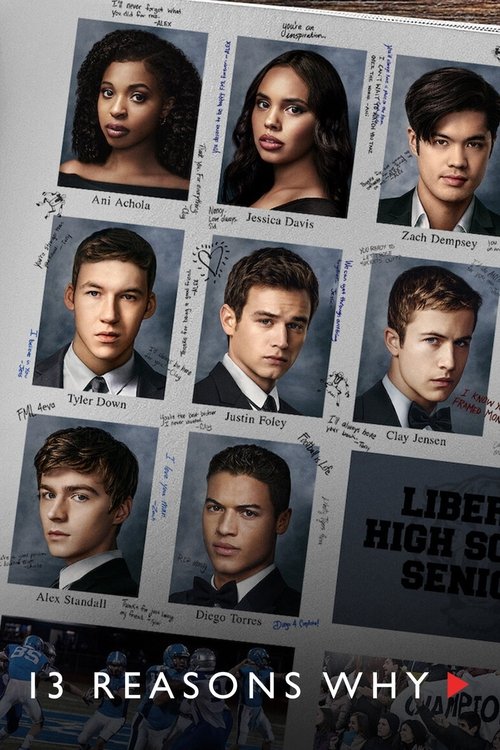
13 Reasons Why
Season 4 Analysis
Season Overview
As graduation approaches, Clay and his friends face agonizing choices when secrets from their past threaten their future.
Season Review
Categorical Breakdown
The narrative frames the local institutions, especially the policing system, as corrupt and willing to obfuscate justice to protect its own, which validates the students' decision to cover up a murder. The season features storylines directly addressing racism, protests, and the policing system. The female lead is rewarded with a college acceptance after writing an essay that mentions 'causing riots' and other disruptive anti-authority actions. The plot exists in large part to reinforce a narrative of systemic injustice that the central, diverse friend group must navigate and ultimately overcome by protecting their own secrets.
The institutions of Western civilization, specifically the local high school and the police, are portrayed as fundamentally oppressive and hostile toward the students. The school installs extreme, intrusive security measures like GPS tracking and electronic message hacking, turning it into a carceral state. The police are shown actively helping to cover up a murder, subverting justice and establishing law enforcement as an antagonistic force. The show champions a school walkout and student riots as empowering acts against this oppressive authority.
The female characters, particularly Jessica, are positioned as strong, morally superior leaders who head up a feminist group named H.O. (Hands Off) and are actively engaged in 'smashing the patriarchy.' The male lead, Clay Jensen, is depicted as severely mentally ill, having disassociative states, paranoia, and being unable to control himself, contrasting starkly with the competent female lead. A major scene involves a character being cheered for proclaiming 'FUCK THE PATRIARCHY!!!' The focus is on female empowerment through activism and the emasculation of the primary male protagonist.
Alternative sexual identity is a central, major plot point for multiple characters, notably Alex Standall's journey of self-acceptance and his relationship with Charlie. The season culminates in Alex and Charlie being crowned Prom Kings, with the former jocks cheering them on, positioning alternative sexuality as the celebrated new norm. The cast is heavily saturated with LGBTQ+ characters, including Tony, Courtney, Ryan, Caleb, Winston, and Alex, with commentary noting that the number of same-sex relationships and interests is higher than the straight ones.
Moral reality is consistently portrayed as subjective and malleable, dictated by group loyalty and situational ethics. Characters who committed or covered up murder and incited a riot face zero legal or moral repercussions, and in fact achieve prestigious success. The show's core moral framework revolves around the secular pursuit of mental health through therapy, suggesting that an objective, transcendent moral law is irrelevant to the characters' well-being and success. Traditional religion has a minimal presence, appearing only as a pastor at a funeral, immediately deferring to the psychological drama of the main characters.