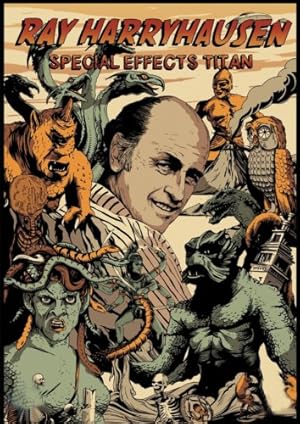
Ray Harryhausen: Special Effects Titan
Plot
This is the definitive documentary about Ray Harryhausen. Aside from interviews with the great man himself, shot over five years, there are also interviews and tributes from Vanessa Harryhausen, Tony Dalton, Randy Cook, Peter Jackson, Nick Park, Phil Tippet, Peter Lord, Terry Gilliam, Dennis Muren, Rick Baker, John Landis, Ken Ralston, Guillermo Del Toro, Jean-Pierre Jeunet, Robert Zemeckis, James Cameron, Steven Spielberg and many more. For the first time Ray and the Foundation have provided unprecedented access to film all aspects of the collection including models, artwork and miniatures as well as Ray's private study, where he designed most of his creations, and his workshop where he built them. In addition the documentary will use unseen footage of tests and experiments found during the clearance of the LA garage. Never before has so much visual material been used in any previous documentary about Ray. This definitive production will not only display a huge part of the unique collection but will illustrate the influence that Ray's work has had on film makers during the past fifty or so years.
Get the Weekly Woke Watchlist
New and trending movies scored for woke bias, preachy messaging, and forced political themes — before you waste your evening.
No spam. One useful email per week.
Overall Series Review
Categorical Breakdown
The film centers on the technical and artistic merit of Ray Harryhausen's work, which is the sole measure of value presented. The narrative celebrates individual genius and the impact of his unique animation style. There are no attempts to vilify whiteness or white male achievement, nor are immutable characteristics used as a basis for judging character or systemic privilege.
The documentary is a loving and detailed tribute to an American film artist and a core element of classic Western cinema, celebrating its technical innovation and worldwide influence. The institution of cinematic heritage is treated with gratitude and deep respect. The ancestors being honored are the pioneers of special effects, and their legacy is presented as fundamentally positive and inspirational.
The focus is strictly on Ray Harryhausen's professional career. Traditional family roles are acknowledged positively, such as the mention that Harryhausen’s father assisted with mechanics and his mother created costumes for his models. The film is a merit-based examination of a male artist's career, and it contains no 'Girl Boss' tropes, no emasculation of men, and no anti-natal or anti-family messaging.
The documentary's subject matter is the technical process of stop-motion animation and the history of one artist's career. Sexual identity is not a part of the narrative or analysis in any capacity. The film adheres to a normative structure by simply ignoring all forms of sexual ideology or the deconstruction of the nuclear family, which is typical for a career retrospective.
The narrative is focused on special effects, not religion. Harryhausen's work often deals with classical myths and transcendent themes like heroism and fate in films such as *Jason and the Argonauts* and *The 7th Voyage of Sinbad*. There is no discernible hostility toward religion, Christianity, or any embrace of moral relativism; the morality is implicitly objective in the heroes versus monsters dynamic of the films discussed.
Get the Weekly Woke Watchlist
New and trending movies scored for woke bias, preachy messaging, and forced political themes — before you waste your evening.
No spam. One useful email per week.