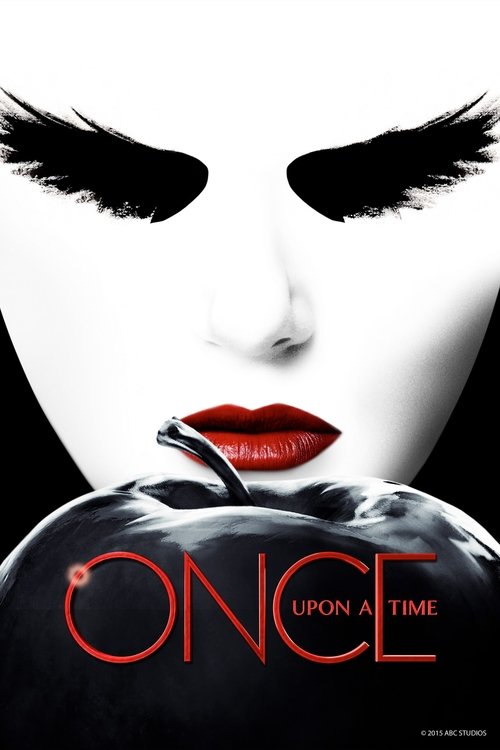
Once Upon a Time
Season 5 Analysis
Season Overview
No specific overview for this season.
Season Review
Categorical Breakdown
The season features significant race-swapping of historical and legendary figures, including a Black Lancelot and a Latina Guinevere. King Arthur, the traditional hero of the British mythos, is depicted as a deceptive and irredeemable villain, while the narrative prioritizes the perspectives of a diverse supporting cast.
The narrative remains centered on the preservation of the home and the importance of returning to the community of Storybrooke. It values the protection of the family unit and the small-town structure, though it shows a willingness to deconstruct and vilify the foundational myths of Western literature like the Knights of the Round Table.
Emma Swan dominates the narrative as both the primary antagonist and the primary hero, frequently rescuing her male love interest. Merida is introduced as a character who overtly rejects marriage and traditional domesticity in favor of combat and leadership. Men in the series are often portrayed as emotionally dependent or in need of redemption facilitated by the women.
The series officially incorporates queer theory into its magical lore by featuring a romantic 'True Love's Kiss' between Ruby (Red Riding Hood) and Dorothy. This plot point explicitly signals that same-sex relationships possess the same magical weight and 'purity' as the traditional male-female pairings that previously defined the show's universe.
The afterlife is depicted through the lens of the Underworld, where souls are judged by their internal psychology rather than a transcendent moral law. The show replaces traditional religious concepts of heaven and hell with a bureaucratic 'limbo,' suggesting that morality is a matter of personal 'closure' rather than divine truth.