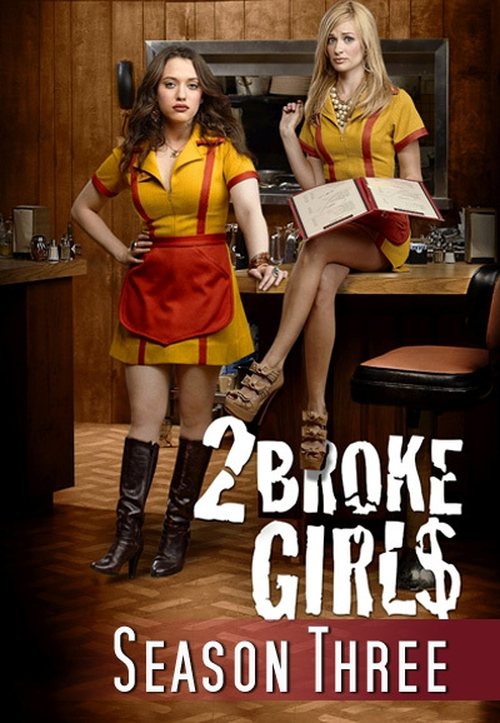
2 Broke Girls
Season 3 Analysis
Season Overview
The third season of 2 Broke Girls serves up sweet surprises for two of Brooklyn’s hottest waitresses, Max and Caroline. They’ve got a new cupcake business at the diner’s back walk-up window, and Caroline and Max negotiate a work-study program at the Manhattan School of Pastry: Caroline works in the office so Max can study professional baking. Plus, love – and the aroma of freshly cooked tarts – is in the air! Caroline has the hots for the school’s hunky master chef and Max falls head over sticky buns for the outrageous class clown. The girls still worry about money – but their friendship is worth a million bucks.
Season Review
Categorical Breakdown
The show rejects the intersectional hierarchy by using race and ethnicity as sources of crude humor rather than protected statuses. Every character, from the Korean owner to the Ukrainian cook, is a walking stereotype used for punchlines. There is no lecturing on white privilege; instead, Caroline's former wealth is a constant target of ridicule.
The narrative is driven by the desire to succeed within the American capitalist system. The characters aspire to entrepreneurship and upward mobility. There is no framing of Western society as fundamentally corrupt, only as a gritty reality where one must work hard to survive.
The female leads are the opposite of 'Mary Sues'; they are crude, frequently fail, and are defined by their flaws. However, the show regularly utilizes the emasculation of the diner owner, Han, as a primary comedic device. Female independence is centered, but not through a lens of moral perfection.
Side characters often represent flamboyant gay stereotypes, such as the waiter Luis or classmates at the pastry school. These characters are used for comedy rather than for pushing gender ideology or deconstructing traditional norms. Sexual identity is treated as a joke-fodder rather than a political statement.
The show operates in a spiritual vacuum where characters are driven by survival and sexual desire. While not aggressively hostile toward religion, it maintains a nihilistic and secular worldview. Traditional morality is absent, replaced by a cynical, transactional approach to life.