House of Cards
Season 5 Analysis
Season Overview
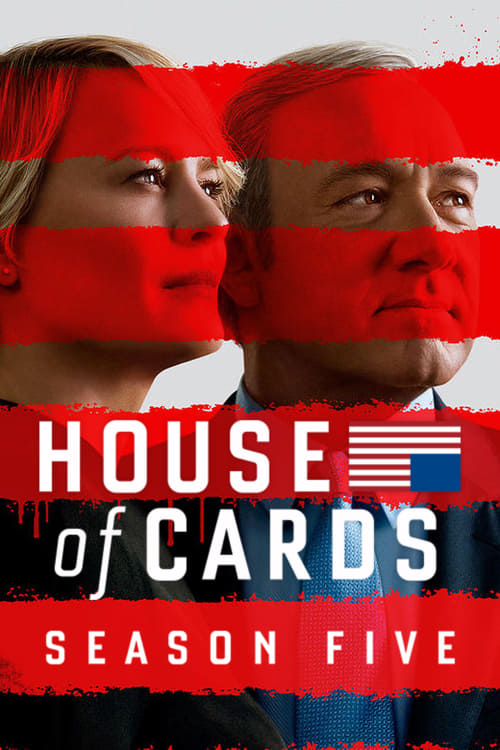
Season five picks up where season four left off: in the midst of a tense presidential election that puts the Underwoods on the same ticket against energetic Republican upstart Will Conway. Viewers will see how their heated campaigns play out as well as which alliances dissolve in the aftermath. Perhaps the biggest question is if Frank and Claire’s relationship is among them.
Season Review
Categorical Breakdown
The main antagonists, Frank Underwood and Will Conway, are both white males whose power is depicted as ruthlessly corrupt and ineffectual. The narrative criticizes the Republican candidate's 'tone deaf' approach to minority voters. However, the primary conflict is a meritocracy of evil, where characters are judged on their ability to amass power, not their immutable characteristics. The narrative is focused more on political corruption than racial hierarchy.
The season earns a high score as it frames the core institutions of Western democracy—the Presidency, the election system, and the media—as wholly corrupt, easily manipulated tools for personal gain. The protagonists actively undermine the election process, manufacture international crises, and use fear to control the populace, fundamentally portraying the 'home culture' and its systems as self-serving and rotten.
The narrative's focus on Claire Underwood's rise to the presidency firmly establishes the 'Girl Boss' trope. Claire is portrayed as a hyper-competent, ruthless, and amoral figure whose sole fulfillment is career and power. She actively supplants, and even destroys, the prominent male figures around her, including her husband, and her pursuit of power is entirely antithetical to family or natalist values.
The score is low because the season avoids didactic lecturing on sexual ideology. However, the protagonist couple's non-traditional, polyamorous/open relationship and the male lead's bisexuality/pansexuality are firmly established as part of the show's amoral norm, which actively deconstructs the traditional nuclear family structure. These elements are part of the characters’ private lives and not a vehicle for broader social commentary.
The show's philosophical core is the rejection of transcendent morality and the embrace of nihilistic moral relativism. Frank Underwood frequently addresses the audience to mock the concept of a higher moral law, explicitly defining morality as subjective 'power dynamics.' Faith is never shown as a source of strength and is only referenced in the context of corrupt power worship, such as the white elite retreat at Elysian Fields.