Death in Paradise
Series Overview
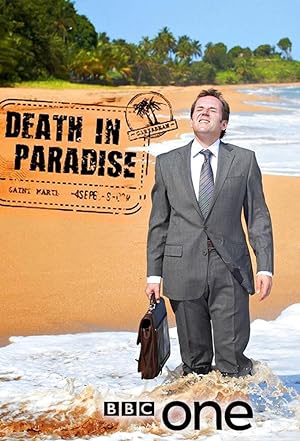
Scotland Yard DI Richard Poole is sent to the Caribbean island of Sainte Marie to solve a fellow policeman's murder. Having done so, he finds himself seconded to the local police force as the dead man's replacement. Poole proves to be a brilliant detective, solving several complex murders. He's not quite suited to either the pace of life on the island or the heat and sand, neither of which he likes very much. He also doesn't like seafood. That aside, the place is just great. In later series, other English and Irish police officers head the investigative team, namely Humphrey Goodman, Jack Mooney, and Neville Parker.
Get the Weekly Woke Watchlist
New and trending movies scored for woke bias, preachy messaging, and forced political themes — before you waste your evening.
No spam. One useful email per week.
Overall Series Review
Categorical Breakdown
The diverse casting is narratively justified by the Caribbean setting rather than a desire to fill quotas. While the British lead is often a fish out of water, his intellectual merit and detective skills are the primary focus. The show avoids lecturing on privilege or colonial guilt, opting instead for a meritocratic portrayal of the police force.
The series treats British eccentricities with affection rather than contempt. The British detectives often cling to their home traditions—like wearing wool suits in the heat or insisting on proper tea—which are framed as harmless and endearing quirks. Both British and Caribbean cultures are portrayed with mutual respect.
Female officers are depicted as highly competent and essential to the team, yet they are not portrayed as flawless 'Girl Bosses.' They have realistic professional and personal struggles. The male leads are often socially awkward or bumbling, but their brilliance as detectives is never undermined to make the female characters look better.
The show focuses almost entirely on traditional heterosexual pairings and family units. Sexual identity is not a central theme of the series, and the narrative does not engage in the deconstruction of the nuclear family or gender theory.
Faith is occasionally a backdrop for island life and is treated with general neutrality or respect. Religious figures appear as suspects in typical mystery fashion, but the show does not frame Christianity or religion as inherently oppressive or evil. Morality is depicted as objective rather than relative.
Get the Weekly Woke Watchlist
New and trending movies scored for woke bias, preachy messaging, and forced political themes — before you waste your evening.
No spam. One useful email per week.