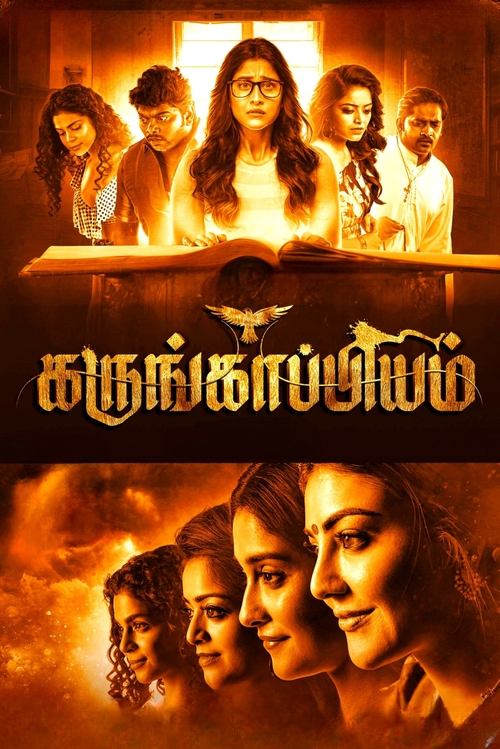
Karungaapiyam
Plot
Set during the lockdown, Umayal Karthika deciding to spend time at a 100-year-old unkempt library in a bid to divert and heal from a heartbreak. From the sea of books, she picks up Karungaapiyam and with her reading different chapters, and her imagination about the stories comes to life.
Get the Weekly Woke Watchlist
New and trending movies scored for woke bias, preachy messaging, and forced political themes — before you waste your evening.
No spam. One useful email per week.
Overall Series Review
Categorical Breakdown
The narrative's central conflict is not based on the Western intersectional lens of 'whiteness' but a powerful critique of local systemic oppression. The plot depicts a benevolent, gifted woman being victimized by a corrupt local hierarchy for power and wealth. The story's focus is on the power dynamics within the community where an innocent is persecuted by those with local privilege.
The film strongly frames ancestral home culture and traditional society as fundamentally corrupt, misogynistic, and superstitious, leading to the brutal murder of an innocent woman. Furthermore, a segment features benevolent aliens who arrive to instruct two local men on 'the significance of humanity and selflessness,' positioning an external, non-human culture as morally and spiritually superior to the culture of the home and its people.
Gender dynamics are heavily skewed. The primary storyline centers on the unjust persecution of a powerful woman by male villains who are either greedy, corrupt, or sexually predatory. Subsequent stories feature a female cannibalistic serial killer who preys on and abducts men, presenting a highly toxic but completely empowered female archetype. Men are largely depicted as either incompetent, weak, or toxic antagonists throughout the different segments.
Alternative sexualities are a non-factor in the main plot and its themes of supernatural horror and social critique. The narrative does not focus on sexual ideology, gender theory, or the deconstruction of the nuclear family. Any minor non-normative characters are incidental, not central to the film's ideological focus.
Traditional religion is depicted as corrupt through the character of the wicked priest (Namboothri), who conspires against the protagonist to seize her wealth. This links organized religious authority directly to evil and false accusation. However, the overall story acknowledges a higher, transcendent spiritual reality through the existence of ghosts, divine power, and moral aliens, which prevents a complete spiritual vacuum or moral relativism.
Get the Weekly Woke Watchlist
New and trending movies scored for woke bias, preachy messaging, and forced political themes — before you waste your evening.
No spam. One useful email per week.