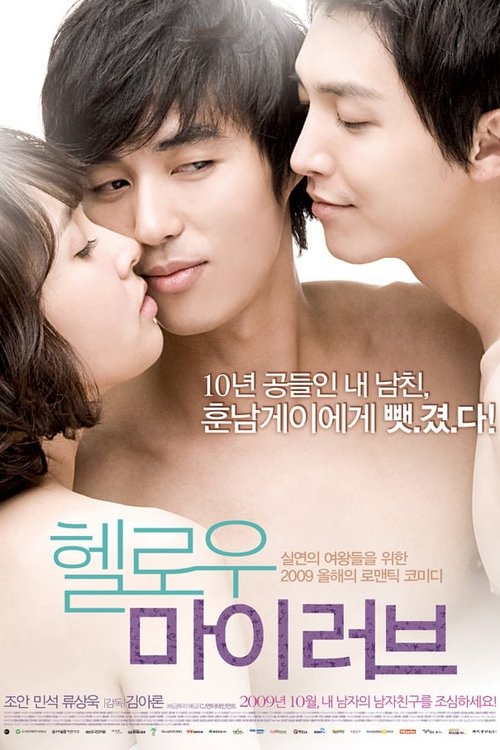
Hello My Love
Plot
Ho-jung is a scriptwriter in a local radio station. She is waiting for her 30th birthday and also eager to be promoted as a DJ of her own program. One day, she hears that Won-jae, her old flame, will be back to town again after 2 years studying in France. With a dream of getting married with him, Ho-jung is getting excited.
Get the Weekly Woke Watchlist
New and trending movies scored for woke bias, preachy messaging, and forced political themes — before you waste your evening.
No spam. One useful email per week.
Overall Series Review
Categorical Breakdown
The narrative's central conflict is entirely dependent on sexual identity, an immutable characteristic, and the subsequent societal oppression faced by the gay male characters. The conflict exists to foreground the struggle of a marginalized sexual group against normative social pressures. The story does not feature the vilification of whiteness or race-swapping since it is a South Korean production with Korean characters.
The traditional, conservative cultural elements of the home society are depicted as archaic and oppressive forces through their homophobic reactions. This includes the use of a shamanistic exorcism intended to 'cure' the male character's homosexuality, framing traditional cultural practices as harmful and outmoded. The overseas experience in France is implicitly presented as a place where the non-traditional relationship was able to form and exist.
The female lead is an independent career woman at a radio station, but she is not portrayed as a 'Mary Sue' or perfect 'Girl Boss.' Her actions, including giving terrible advice and sexually harassing one of the men, show her as deeply flawed and sometimes toxic. The narrative deconstructs the traditional goal of compulsory heterosexual marriage, but it is not explicitly anti-natalist; the core dynamic centers on sexual orientation rather than a critique of motherhood.
The narrative centers an alternative sexuality relationship, immediately deconstructing the expected traditional male-female pairing and nuclear family structure. The existence of the gay couple and the conflicts surrounding their relationship are the primary plot mover. Sexual identity is the most important characteristic defining the major male characters' lives and the protagonist's dilemma.
Traditional religion and spiritual belief are explicitly shown as instruments of bigotry and oppression through the use of a shamanistic exorcism intended to 'cure' the gay character. This scene depicts traditional spiritual practices being employed to enforce a rigid, anti-gay moral code, which frames such faith systems as a source of harm and archaic thinking.
Get the Weekly Woke Watchlist
New and trending movies scored for woke bias, preachy messaging, and forced political themes — before you waste your evening.
No spam. One useful email per week.