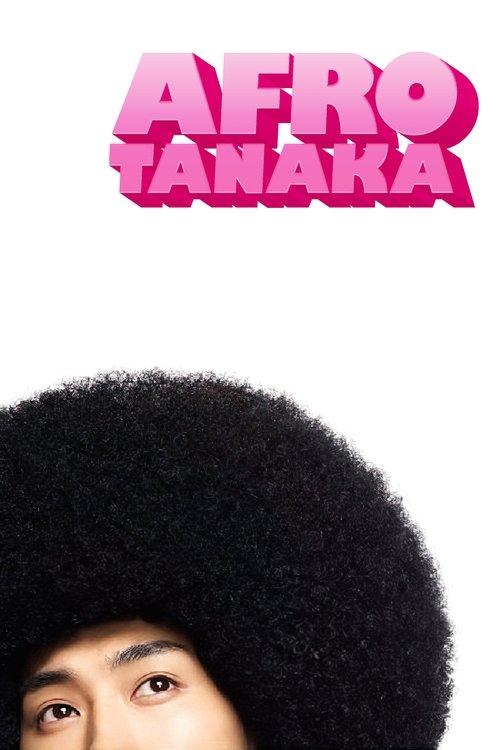
Afro Tanaka
Plot
Hiroshi Tanaka sports an intense perm which looks like the afro hairstyle favored by some African-Americans back in the 1970's. He doesn't get his hair done at a hair shop, he was actually born with his hair like that. For freedom, Hiroshi moves to Tokyo. He works hard there and, even though he turns 24, he still doesn't have a girlfriend.
Get the Weekly Woke Watchlist
New and trending movies scored for woke bias, preachy messaging, and forced political themes — before you waste your evening.
No spam. One useful email per week.
Overall Series Review
Categorical Breakdown
The movie's entire premise revolves around a physical characteristic (the protagonist's naturally-occurring afro) that makes him an outcast and a 'symbol of uncool' in a purely social, personal context. The story does not use the unique hairstyle as a vehicle to lecture on race, intersectionality, or systemic oppression. The narrative focuses on Tanaka's personal lack of merit (social incompetence, low-status job) as the core problem. There is no vilification of 'whiteness' or forced insertion of diversity, as the setting and cast are homogeneously Japanese.
The film operates as a localized, 'parochial' Japanese slacker comedy that is firmly rooted in the protagonist's daily life as a manual laborer in Tokyo, without any indication of civilizational self-hatred. The focus is on the character's personal struggles for a girlfriend and a better life, not on deconstructing or demonizing Japanese culture or ancestors. The film respects the cultural institution of the high school friendship pact and the importance of marriage.
The core plot is driven by a male character's traditional goal of 'wooing and winning a member of the opposite sex' to keep a promise, which is a very normative and complementary dynamic. The main character is a classic bumbling idiot and 'clueless protag' but is presented sympathetically and his emasculation is a source of comedy. The romantic interest is described as a 'beautiful' and 'innocent' neighbor, a traditional feminine archetype, not a 'Girl Boss' figure. The narrative goal is the formation of a heterosexual couple, not anti-family or anti-natal messaging.
The narrative strictly follows the heterosexual quest of the male protagonist for a female partner to bring to a wedding. The entire romantic focus is on traditional male-female pairing. No presence of alternative sexualities, gender ideology lecturing, or deconstruction of the nuclear family is observed in the plot or themes.
There are no significant religious themes or conflicts in the movie. The plot is a purely secular, personal romantic comedy. No hostility toward religion, specifically Christianity, is present, and the film does not engage in a debate on transcendent morality versus subjective relativism, keeping the focus on social humor and personal relationships.
Get the Weekly Woke Watchlist
New and trending movies scored for woke bias, preachy messaging, and forced political themes — before you waste your evening.
No spam. One useful email per week.