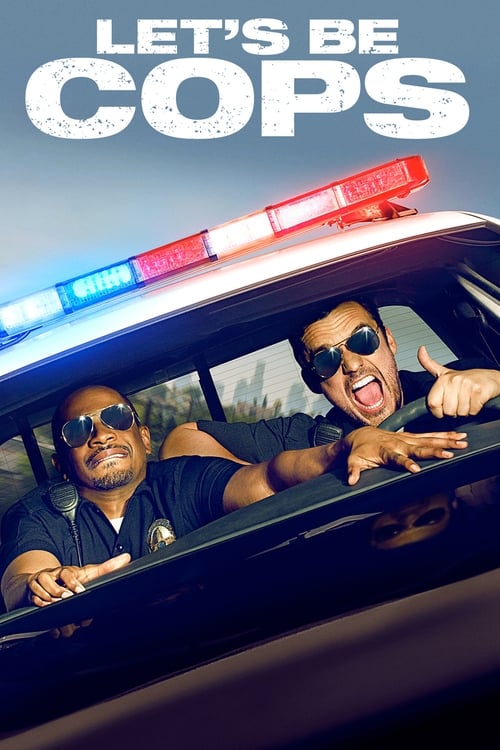
Let's Be Cops
Plot
Best pals Ryan and Justin are stalled in their respective careers -- a fact that is painfully driven home when they go to a college reunion. Dressed as police in the mistaken belief that they were to attend a costume party, Ryan and Justin find that the uniforms earn them much respect and attention. Although Justin is uncomfortable with the idea, Ryan decides to continue with the charade, putting them both in increasingly dangerous situations. When these newly-minted “heroes” get tangled in a real life web of mobsters and dirty detectives, they must put their fake badges on the line.
Get the Weekly Woke Watchlist
New and trending movies scored for woke bias, preachy messaging, and forced political themes — before you waste your evening.
No spam. One useful email per week.
Overall Series Review
Categorical Breakdown
The casting features a white and a black male lead, but the plot completely disregards racial dynamics or privilege, focusing solely on the power derived from the police uniform itself. There is no lecture on systemic oppression, and both main characters are presented as meritless 'losers' seeking validation. The narrative is universally colorblind in its focus on individual male failure and eventual self-improvement.
The film does not portray Western civilization or national institutions as fundamentally corrupt. It centers on the personal immaturity of two friends, whose journey concludes with them embracing their role in upholding law and order, even if through a fraudulent start. Institutions like the police are upheld as a symbol of respect and necessary authority.
Female characters are almost entirely one-dimensional, serving as props for the male leads' pursuit of status and sexual gratification. Women are portrayed as being instantly attracted to the uniform and authority, characterized as either oversexed, idiotic, or in need of rescuing. The main female love interest is passive and fond of 'bad boys,' which is the inverse of the 'Girl Boss' trope.
The narrative features a completely normative structure. The main characters' abuse of power is solely aimed at gaining respect and attracting women, reinforcing traditional heterosexual pairings. There is no presence of queer theory, gender ideology, or deconstruction of the nuclear family.
Religious themes are entirely absent from the film. The moral framework is strictly secular, centering on the ethics of impersonating police and the ultimate distinction between criminal mobsters and agents of the law. The plot adheres to a clear objective moral code where crime is wrong and heroism is good.
Get the Weekly Woke Watchlist
New and trending movies scored for woke bias, preachy messaging, and forced political themes — before you waste your evening.
No spam. One useful email per week.