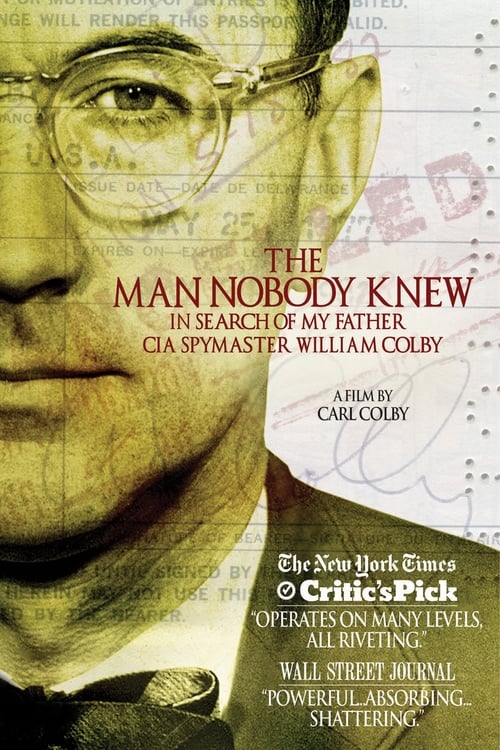
The Man Nobody Knew: In Search of My Father, CIA Spymaster William Colby
Plot
A personal exploration into the life of America's controversial former CIA Director told through the eyes of his wife and filmmaker son, Carl. Through extraordinary events in twentieth century history, this consummate soldier/spy stood at the center of the Agency's most clandestine activities and operations. The film reveals the 'cover life' of this CIA operative, who followed orders and took on the dirtiest assignments until the Nixon Administration ordered him to 'stonewall' Congress about the CIA's past abuses, but he refused. This film reveals why, for the first time, he could not obey.
Get the Weekly Woke Watchlist
New and trending movies scored for woke bias, preachy messaging, and forced political themes — before you waste your evening.
No spam. One useful email per week.
Overall Series Review
Categorical Breakdown
Characters and figures are assessed based on their professional merit and their actions within the historical context of the CIA and Cold War. The story is a straightforward biography of a white male, his family, and his contemporaries. The narrative contains no elements of intersectional critique, no focus on race or immutable characteristics for vilification, and no forced diversity in casting or historical revision.
The documentary includes a critique of the U.S. government institution (the CIA) by detailing its illegal activities, known as the 'Family Jewels,' and controversial programs like Phoenix in Vietnam, which leads to a necessary moral examination of American actions. This critique, however, comes from the inside—Colby's decision to reveal the truth to Congress is framed as an act of institutional integrity and reform, not an outright denunciation of the nation or Western civilization as fundamentally corrupt. The early part of the film respects the sacrifices of ancestors who fought to preserve their way of life during WWII.
The female characters, primarily Colby's wife, are depicted in the traditional role of a spouse and mother in a mid-20th-century family, enduring the distance and emotional isolation caused by the husband's clandestine work. The mother is portrayed as poised and articulate, but the central conflict remains the father's secrecy. The film documents a breakdown of the nuclear family due to the nature of the husband’s career, but it does not present a 'Girl Boss' trope, nor does it lecture that motherhood itself is a prison.
The subject matter focuses entirely on the political and personal life of William Colby, a heterosexual man, his wife, and their children, within the context of 20th-century global politics. There is no presence of alternative sexualities, gender ideology, or deconstruction of the nuclear family presented as a central or secondary theme in the narrative.
The film’s central moral conflict—William Colby's decision to break ranks and disclose the CIA's abuses—is rooted in a search for truth and integrity, implying a higher moral code rather than a celebration of subjective power dynamics. The film mentions his work with the Vatican to fight Communism, placing religion within its historical and political context. It contains no explicit hostility toward or vilification of Christianity or traditional faith.
Get the Weekly Woke Watchlist
New and trending movies scored for woke bias, preachy messaging, and forced political themes — before you waste your evening.
No spam. One useful email per week.