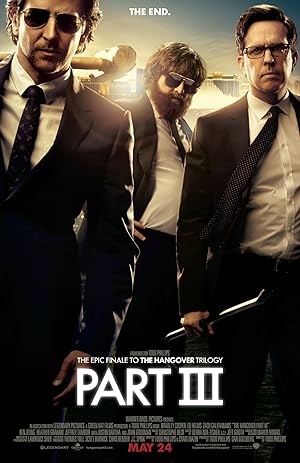
The Hangover Part III
Plot
In the aftermath of the death of Alan's father, the wolfpack decide to take Alan to get treated for his mental issues. But things start to go wrong on the way to the hospital as the wolfpack is assaulted and Doug is kidnapped. Now they must find Mr. Chow again in order to surrender him to the gangster who kidnapped Doug in order to save him.
Get the Weekly Woke Watchlist
New and trending movies scored for woke bias, preachy messaging, and forced political themes — before you waste your evening.
No spam. One useful email per week.
Overall Series Review
Categorical Breakdown
The narrative does not lecture on privilege, vilify 'whiteness,' or force the insertion of diversity. The protagonists are white males, and while they are often depicted as bumbling idiots, they are the central, heroic figures. Non-white characters like Mr. Chow are depicted as crude, stereotypical caricatures for comedic effect, often playing the role of the antagonist or chaos agent. The movie’s humor is derived from racial and ethnic stereotypes, which is a pre-woke form of cultural insensitivity, not the intersectional lens of a 'woke mind virus.'
The central conflict is a chaotic crime caper that begins with the main characters trying to take one of their own to an Arizona treatment facility, abandoning the responsibilities of home and family life. The story focuses on the nihilistic and hedonistic misadventures of the main characters in a fundamentally amoral world. However, there is no explicit demonization of Western civilization, American heritage, or ancestors in the plot. Family and friendship are the driving forces of the intervention and rescue, showing a basic, uncritical loyalty to immediate institutions.
The film focuses almost entirely on male homosocial bonding, with women characters being marginalized. Female roles, such as the wives and love interest, primarily serve as either anxiously waiting domestic figures or romantic prizes for the male protagonists. The film actively avoids 'Girl Boss' tropes or the systematic emasculation of the male characters by female counterparts. Masculinity, though highly irresponsible, is centered and prioritized over heterosexual relationship dynamics.
The humor frequently relies on homosexual panic and the use of slurs and caricatures related to non-normative sexuality, particularly from Alan and Mr. Chow. The film does not center alternative sexualities or deconstruct the nuclear family; rather, it uses the possibility of non-heterosexual behavior as a source of comedy to reinforce a crude normative structure. Jokes about male affection are made to elicit shock and discomfort from the other male characters.
The core moral compass is entirely subjective, with the film embracing moral relativism as a feature of its dark comedy. Cold-blooded murder and the disposal of animal and human life are often played for laughs, creating a spiritual vacuum where objective moral law is absent. Furthermore, there is frequent, pervasive sacrilegious language through the misuse of sacred names, which is hostile toward traditional religion.
Get the Weekly Woke Watchlist
New and trending movies scored for woke bias, preachy messaging, and forced political themes — before you waste your evening.
No spam. One useful email per week.