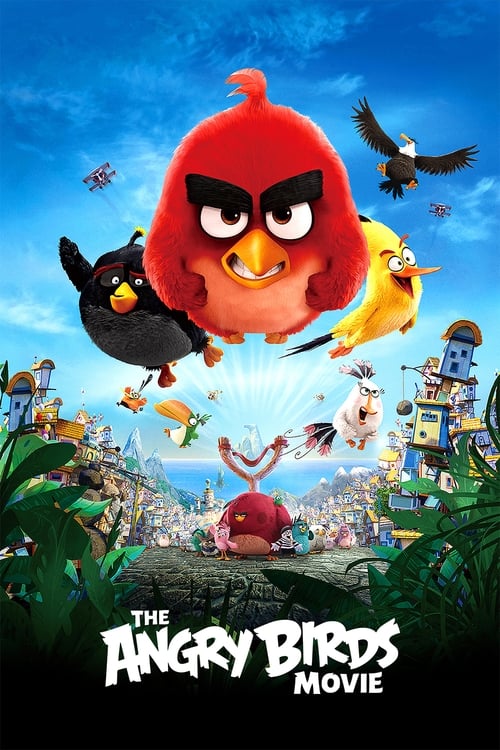
The Angry Birds Movie
Plot
An island populated entirely by happy, flightless birds or almost entirely. In this paradise, Red, a bird with a temper problem, speedy Chuck, and the volatile Bomb have always been outsiders. But when the island is visited by mysterious green piggies, it’s up to these unlikely outcasts to figure out what the pigs are up to.
Get the Weekly Woke Watchlist
New and trending movies scored for woke bias, preachy messaging, and forced political themes — before you waste your evening.
No spam. One useful email per week.
Overall Series Review
Categorical Breakdown
The narrative's central conflict is a broad political allegory pitting a naive, established populace against manipulative newcomers, a dynamic that is open to multiple political interpretations. The hero, Red, is judged based on his character (his anger) and his correct assessment of the threat, eventually achieving merit-based leadership. The plot avoids reliance on race, intersectional hierarchy, or the vilification of any group based on immutable characteristics, instead affirming the right of an outcast to be right and save his people.
The film criticizes the existing Bird Island culture for its pathological naivety, forced happiness, and blind acceptance of outsiders, showing this societal structure to be weak and self-destructive. However, the narrative ends by validating the aggressive defense of the island, its inhabitants, and its future (the eggs). This champions the protection of one's home and lineage against external threats and validates the inherent desire to protect one's own people and institutions, which runs counter to the spirit of civilizational self-hatred.
The core plot is entirely focused on the heroic mission to rescue the eggs, which function as the future generation and children of the community, firmly rooting the narrative in a pro-family/pro-natalist framework. The main heroes are male, and the movie vindicates male anger as a necessary force for justice. The female character, Matilda, is initially depicted as a flawed, comically-flaky instructor, not an instantly perfect ‘Girl Boss,’ suggesting a more traditional, complementary character dynamic.
There is no incorporation of alternative sexual ideologies, deconstruction of the nuclear family, or instruction on gender identity within the narrative. A few adult-themed visual jokes are present, such as pigs dancing in suggestive attire and a book title reference, but these do not constitute an ideological push for the queer theory lens.
The plot features a major narrative arc where the legendary and revered protector of the island, the Mighty Eagle, is revealed to be a false idol who is lazy and self-centered. The birds must abandon their passive, collective faith in this symbolic higher power and take action for themselves. The film critiques the reliance on a mythic guardian, substituting passive belief for self-reliance and justified anger, which aligns with a deconstruction of passive spiritual authority.
Get the Weekly Woke Watchlist
New and trending movies scored for woke bias, preachy messaging, and forced political themes — before you waste your evening.
No spam. One useful email per week.