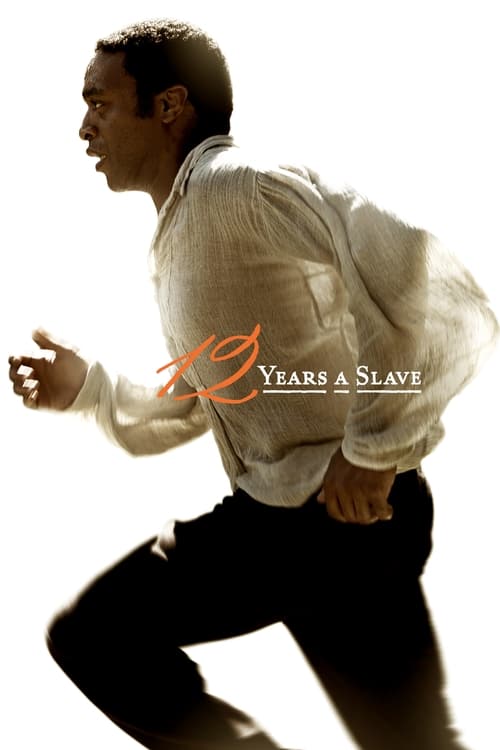
12 Years a Slave
Plot
In the pre-Civil War United States, Solomon Northup, a free black man from upstate New York, is abducted and sold into slavery. Facing cruelty as well as unexpected kindnesses Solomon struggles not only to stay alive, but to retain his dignity. In the twelfth year of his unforgettable odyssey, Solomon’s chance meeting with a Canadian abolitionist will forever alter his life.
Get the Weekly Woke Watchlist
New and trending movies scored for woke bias, preachy messaging, and forced political themes — before you waste your evening.
No spam. One useful email per week.
Overall Series Review
Categorical Breakdown
The plot's entire structure is an explicit and unrelenting depiction of systemic, race-based oppression where an individual’s identity—a free black man—is erased and subjugated by the racial hierarchy of the slave South. The white characters are overwhelmingly depicted as the agents of evil and systemic abuse, with their power derived solely from their 'whiteness' as slaveholders. The narrative functions as a lecture on systemic injustice and the vilification of the Southern white slaveholding class. Nuance exists with the inclusion of a kind white master and a white abolitionist, preventing a perfect 10.
The film functions as a stark and brutal critique of the institution of chattel slavery, portraying a significant part of historical American society—the antebellum South—as fundamentally corrupt, immoral, and barbaric. The system itself is demonized without reservation. However, the protagonist's freedom is restored by the intervention of a Canadian and the legal structure of the Northern United States, suggesting that not all Western/American institutions or heritage are condemned, offering a contrasting value system within the civilization.
Gender dynamics are portrayed through the lens of historical oppression and violence, not modern 'Girl Boss' tropes. Female characters like Patsey and Eliza are victims of intersecting oppressions, highlighting sexual and physical abuse by the white male master and psychological abuse by the white female mistress. The narrative emphasizes the tragic destruction of the nuclear family and motherhood by the system of slavery. Men are depicted as both vile oppressors (Epps) and protective figures (Solomon, Bass). The primary focus is on the historical victimization of enslaved women, not the modern celebration of female dominance or anti-natalism.
The movie is based on a mid-19th-century autobiography and is strictly focused on the historical brutality of racial slavery and the destruction of the traditional family unit. There are no elements of alternative sexualities being centered, nor any focus on deconstructing the nuclear family, gender theory, or sexual ideology.
Christianity is presented in an ambivalent role. The white slave masters, like Epps, actively misuse and manipulate the Bible to justify their cruelty and abuse, which frames traditional religion as a tool of oppression and a source of evil. Conversely, the faith of the enslaved people is shown as a source of collective strength, comfort, and moral resolve through spirituals and prayer. The narrative contrasts a hypocritical, corrupted application of faith with an authentic, transcendent faith that provides dignity.
Get the Weekly Woke Watchlist
New and trending movies scored for woke bias, preachy messaging, and forced political themes — before you waste your evening.
No spam. One useful email per week.