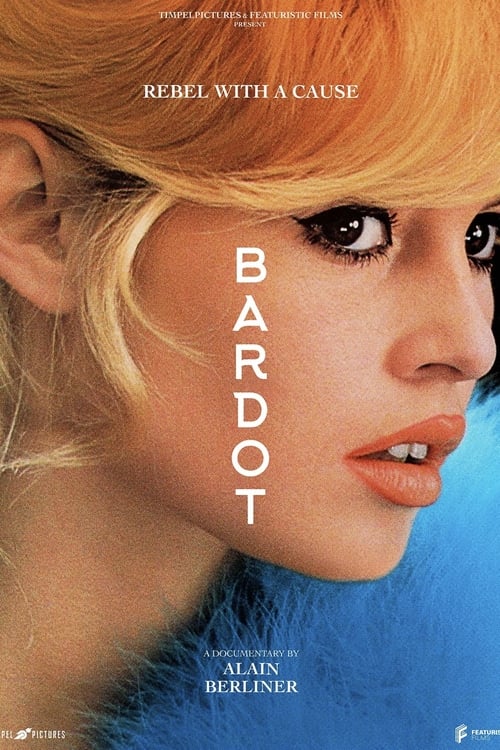
Bardot
Plot
An intimate look at the life of international icon Brigitte Bardot. With exclusive access and the full support of Brigitte Bardot and her team, we will uncover her life, with its hardships, trials and struggles, her work and her legacy.
Get the Weekly Woke Watchlist
New and trending movies scored for woke bias, preachy messaging, and forced political themes — before you waste your evening.
No spam. One useful email per week.
Overall Series Review
Categorical Breakdown
The casting remains historically authentic to the time and person being portrayed. Character struggles are based on gender and individual desire versus societal class/familial expectations, not on race or an intersectional hierarchy that privileges non-white characteristics.
The narrative repeatedly frames 1950s French society, its strict familial structures, and its 'conservative' mores as fundamentally oppressive. The protagonist's success is directly tied to her 'defying the rules of society' and generating a 'tectonic social shift' that destroys the old order.
Brigitte Bardot is portrayed as a 'one-woman avant-garde in gender perception' who must overcome the 'sexism and patriarchalism' of the era to achieve a career. Her liberation is defined by sexual autonomy, the popularization of concepts like 'open marriage,' and her rejection of the constraints imposed by traditional roles and family life.
The focus on sexual liberation centers almost entirely on the heterosexual dynamics of the era, such as promiscuity and the redefinition of marriage. The narrative deconstructs the nuclear family through infidelity and open relationships, but it does not center alternative sexualities or employ explicit gender ideology messaging.
The protagonist rebels against her 'strict upbringing' in a 'Catholic middle-class family.' The restrictive societal and moral code that she fights for her freedom is clearly rooted in traditional, religious-influenced conservatism. The old morality is an obstacle to personal fulfillment.
Get the Weekly Woke Watchlist
New and trending movies scored for woke bias, preachy messaging, and forced political themes — before you waste your evening.
No spam. One useful email per week.