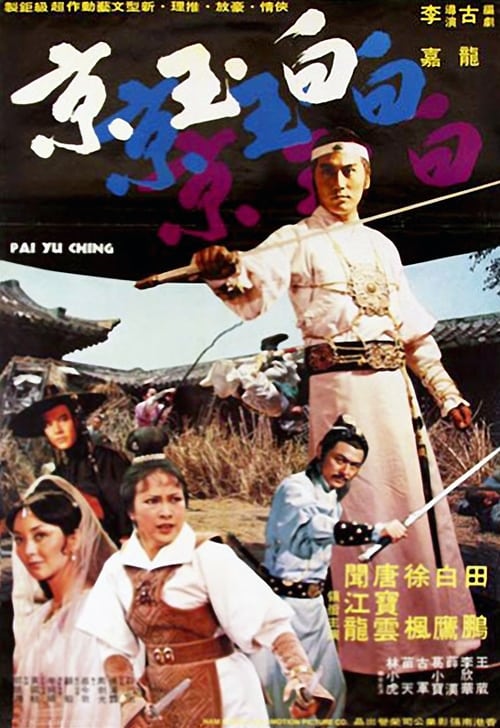
Pai Yu Ching
Plot
A theft of a scroll from a kung fu-society leads to Pai Yu-Cheng getting accused for the theft and most avoid many attacks from heroes trying to regain the scroll.
Get the Weekly Woke Watchlist
New and trending movies scored for woke bias, preachy messaging, and forced political themes — before you waste your evening.
No spam. One useful email per week.
Overall Series Review
Categorical Breakdown
The movie is a traditional Taiwanese wuxia film. The entire conflict is driven by a false accusation and personal honor. Characters are judged solely by their martial skill, virtue, and actions. The cast and setting are culturally authentic East Asian, eliminating the possibility of vilification of whiteness or historical 'race-swapping'.
The narrative is rooted in traditional Chinese martial arts ethics (jianghu), which celebrates skill, loyalty, and a code of honor. The internal conflict (a power-hungry second-in-command) is a standard plot device of betrayal, not a critique that frames the home culture as fundamentally corrupt or racist. Institutions of the martial world are presented as worthy of respect and defense.
The film features Hsu Feng, an actress known for playing strong, formidable swordswomen, which is a trope common to the wuxia genre. These female characters are highly competent and skilled fighters, but their portrayal aligns with complementarianism and power based on merit, not an anti-natalist or 'Girl Boss' framework that emasculates male characters.
As a 1977 Taiwanese martial arts action film, the movie is exclusively focused on martial conflict and honor. There is no presence of alternative sexual ideologies. The structure is normative, focusing on traditional male-female interactions and the established social dynamics of the martial world.
Morality in the film is absolute, with a clear distinction between the innocent hero seeking justice and the villains driven by greed and ambition. The setting and genre rely on a transcendent moral law and objective concepts of good and evil associated with martial virtue, not moral relativism. There is no hostility or lecturing against traditional religious or spiritual structures.
Get the Weekly Woke Watchlist
New and trending movies scored for woke bias, preachy messaging, and forced political themes — before you waste your evening.
No spam. One useful email per week.