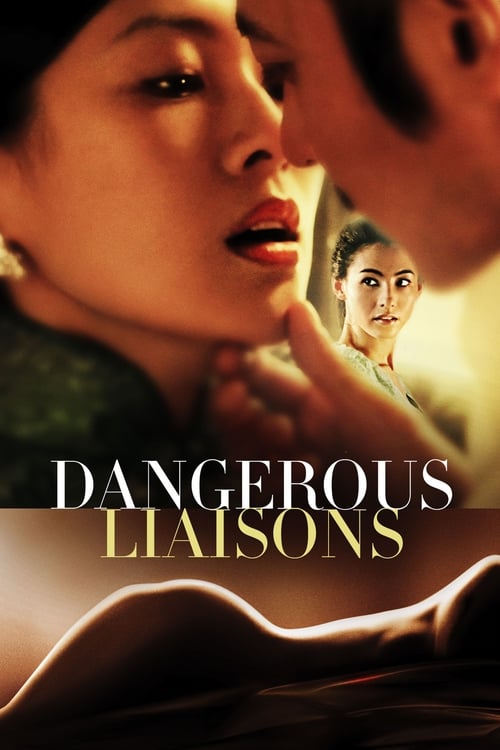
Dangerous Liaisons
Plot
Dangerous Liaisons is a Chinese film by Hur Jin-ho based on the novel with the same title by Pierre Choderlos de Laclos.
Get the Weekly Woke Watchlist
New and trending movies scored for woke bias, preachy messaging, and forced political themes — before you waste your evening.
No spam. One useful email per week.
Overall Series Review
Categorical Breakdown
The film is a Chinese-South Korean production set in 1930s Shanghai, featuring an entirely Asian cast appropriate to the historical setting. The core conflict is based on individual character vice, manipulation, and high-society class dynamics, not on race or immutable characteristics. There is no discernible 'vilification of whiteness' or 'forced insertion of diversity' lecturing, as the casting is culturally authentic to the adaptation's setting.
The film criticizes the elite class of 1930s Shanghai, depicting their 'opulent yet treacherous' world and their self-absorption amid poverty and the threat of Japanese incursion. This is a critique of the moral failings of a specific, decadent class, which is a common narrative trope, not a condemnation of Chinese civilization or heritage as fundamentally corrupt. The focus remains on personal vice rather than systemic or civilizational self-hatred.
The female lead, Mo Jieyu, is a powerful, independent businesswoman and 'master-manipulator.' This gives her a 'Girl Boss' status and significant control over the male characters and the plot, but her character is also the primary villain, whose ambition and scheming lead to tragedy. Her power is destructive and morally condemned by the narrative's conclusion, balancing the 'Girl Boss' trope with a traditional cautionary tale about vice. The main conflict is rooted in a traditional heterosexual seduction wager and revenge.
The narrative centers entirely on traditional male-female pairing, heterosexual seduction, and the nuclear family structure's associated concepts of marriage, widowhood, and virginity. Sexual themes are present as part of the amoral game, but there is no centering of alternative sexualities, deconstruction of the nuclear family beyond the theme of infidelity, or promotion of gender ideology.
The movie operates in a world of high-society decadence and 'amoral gamesmanship.' There is an almost complete absence of religious themes or a connection to a transcendent moral law; the morality is primarily defined by social consequences and personal feelings of guilt or love. However, there is no explicit hostility toward religion or a villainization of Christian characters, making the story's spiritual vacuum one of absence rather than active anti-theism. The tragic ending serves as a secular form of moral consequence for the characters' sins.
Get the Weekly Woke Watchlist
New and trending movies scored for woke bias, preachy messaging, and forced political themes — before you waste your evening.
No spam. One useful email per week.