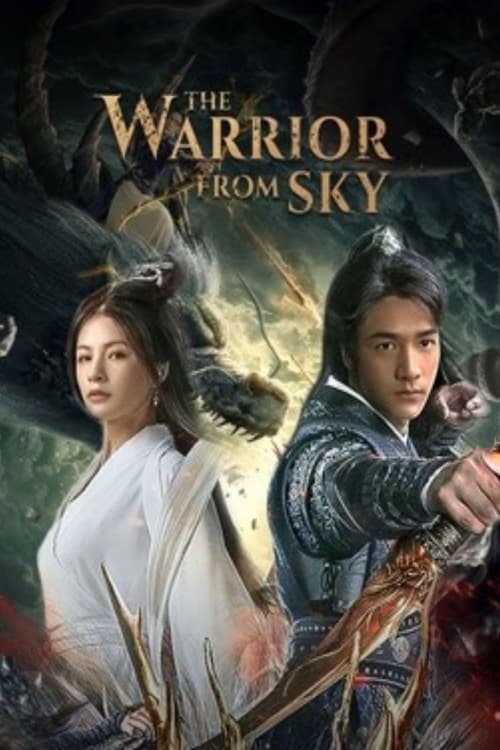
The Warrior From Sky
Plot
The ancient god of war, Chen Nan, who led the gods and demons in the battle against the Heavens, awakens from his tomb at the top of the snowy mountains after a ten-thousand-year slumber. With his divine powers and memories closed, and after a fierce fight with the guardians of the tomb, he inadvertently enters the land of Chu by mistake.
Get the Weekly Woke Watchlist
New and trending movies scored for woke bias, preachy messaging, and forced political themes — before you waste your evening.
No spam. One useful email per week.
Overall Series Review
Categorical Breakdown
The film is a Chinese fantasy set in a historical-mythological context. All major characters are East Asian, reflecting the source material’s cultural setting. The conflict is based purely on merit (spiritual power, martial arts skill) and a moral battle against corruption and evil. There is no discussion of race, intersectional hierarchy, or the vilification of any specific ethnic group. Universal meritocracy is the standard for character power.
The film is Chinese, and the narrative focuses on saving its own world (the Chu state and its realm) from internal political corruption and external cosmic threats (gods and demons). The antagonists are internal political figures and ancient celestial beings, not external or 'Western' cultures. The culture's institutions are not fundamentally framed as corrupt or racist; the problem is evil individuals with power. There is no evidence of civilizational self-hatred.
The score is low, but slightly elevated from a perfect one because of the prominent female character, Nalan Ruo Shui. She is portrayed as an intelligent, strong character, a common feature in the Wuxia genre, and she actively resists an arranged political marriage, demonstrating agency. However, she is not a 'Mary Sue' and is connected to the male lead's romantic past and journey. The narrative does not feature overt anti-natalist messaging or male emasculation; the male protagonist is the amnesiac god of war, an archetype of masculinity and strength.
The narrative follows a normative structure. The central relationship dynamic is heterosexual, involving the male protagonist's search for his past female lover (Yuken) and his interaction with Nalan Ruo Shui. There is no presence of alternative sexual ideology, deconstruction of the nuclear family, or discussion of gender identity or transitioning.
The setting is a high-fantasy world where gods, demons, and the 'Heavens' are literal, powerful entities. The conflict is a cosmic war between these factions. The villain, Zuanzu, is a corrupt spiritual advisor who attempts to achieve immortality by stealing spiritual power, making him a figure of corrupted power, not a critique of faith itself. The overall theme of a god-warrior fighting to save the world indicates a focus on objective good versus evil and a higher moral law, not moral relativism.
Get the Weekly Woke Watchlist
New and trending movies scored for woke bias, preachy messaging, and forced political themes — before you waste your evening.
No spam. One useful email per week.