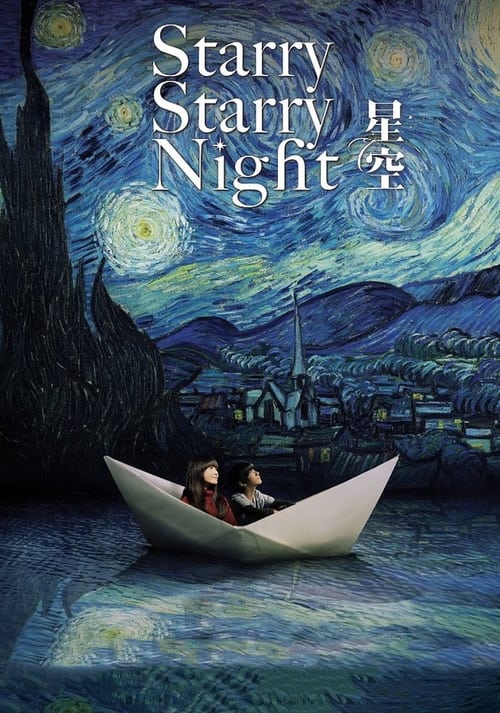
Starry Starry Night
Plot
There was once a young girl named May who felt alienated from everyone around her. May is worried about her mother and father, whose marriage is on the rocks, and she yearns to return to the woods where her grandfather lives. One day, May befriends a boy as lonely as she is. When reality catches up, they run away to a beautiful world that belongs only to them. Both imaginatively escapist and heartbreakingly realistic, their journey speaks to kids and adults alike with the pain of solitude, the sorrow of loss, and the warmth of hope.
Get the Weekly Woke Watchlist
New and trending movies scored for woke bias, preachy messaging, and forced political themes — before you waste your evening.
No spam. One useful email per week.
Overall Series Review
Categorical Breakdown
The film is a Taiwanese production with an entirely East Asian cast, making the categories of 'vilification of whiteness' or 'race-swapping' irrelevant. The story focuses on the emotional world and relational struggles of the children, and characters are judged by their personal empathy and imaginative capacity, not by any immutable characteristics or intersectional hierarchy. The narrative does not contain lectures on privilege or systemic oppression.
The movie's critique is focused on the 'cold and distant' modern urban environment and the painful breakdown of the family unit, contrasting it with the perceived comfort and warmth of the grandfather’s rural, ancestral home. This is a critique of personal and modern societal dynamics (family breakdown), not a hostility toward a Western civilization or a demonstration of civilizational self-hatred. The ancestral figure (the grandfather) is depicted as a source of strength, love, and escape.
The core of the story is the shared emotional journey and budding romance between a girl and a boy. Mei, the female lead, is consistently portrayed as the dominant and more imaginative force who initiates the escape, and the boy, Xiao Jie, is happy to follow her lead. This dynamic gives the girl a high degree of agency but stops short of depicting a 'perfect instantly' Mary Sue trope or actively emasculating the male character, who is an accomplished artist and emotionally sensitive. The film presents the divorce and loss of the nuclear family as a source of deep pain and sorrow for the children, not as a message that motherhood or family is a 'prison.'
The primary relationship explored is a traditional 'budding romance' between the young male and female protagonists. The film centers the traditional male-female pairing as the standard and emotional refuge. There is no presence of alternative sexual ideology, focus on identity, deconstruction of the nuclear family, or lecturing on gender theory. The narrative structure is entirely normative.
The conflict is purely emotional and relational, dealing with family strife, loss, and the search for connection. The film's themes are transcendent: hope, imagination, and emotional truth. There is no depiction of traditional religion as a source of evil, nor are religious characters portrayed as bigoted. The narrative acknowledges a higher moral structure found in family connection and the beautiful objective truth of the cosmos (the starry night) that contrasts with the children's subjective pain.
Get the Weekly Woke Watchlist
New and trending movies scored for woke bias, preachy messaging, and forced political themes — before you waste your evening.
No spam. One useful email per week.