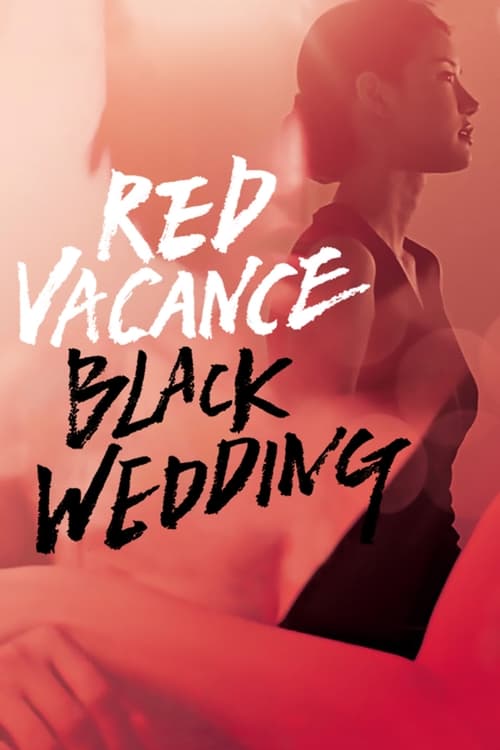
Red Vacance Black Wedding
Plot
Red Vacance A young woman and a married middle-aged man have been involved in an affair for 6 years. They plan to go on a vacation, but the man's wife learns of their affair and takes her husband to a remote place. There the wife asks the husband about his affair. As the husband explains his affair, the wife becomes angrier. The wife is about to burn her husband. Meanwhile, the young woman who was involved in the affair receives a text message from the married man. The young woman goes to meet him, but the text message was actually sent by his wife. All three persons then meet at a vacation home ...
Get the Weekly Woke Watchlist
New and trending movies scored for woke bias, preachy messaging, and forced political themes — before you waste your evening.
No spam. One useful email per week.
Overall Series Review
Categorical Breakdown
The film is South Korean and centers its conflict entirely on personal immorality (adultery), not on race, systemic oppression, or intersectional hierarchy. The casting is culturally authentic to the setting. The narrative judges characters based on their moral failings and not immutable characteristics.
The film’s critique is aimed at the universal problem of marital infidelity and the individuals who engage in it, not at Korean society, culture, or ancestors as fundamentally corrupt. The over-the-top violence in the 'Red Vacance' segment is satirical dark comedy about marriage breakdown, not an act of civilizational self-hatred.
Gender dynamics are highly dysfunctional, with no celebration of complementary roles. The male characters are emasculated and incompetent philanderers. Female characters, however, are not depicted as aspirational 'Girl Boss' Mary Sues but as flawed, selfish, and vengeful. The mistress character is described in one review as selfish and cold, and the wife is physically violent. The overall effect is a condemnation of all parties' actions, but the clear degradation of the husband aligns with a moderate score in this category.
The narrative is entirely centered on illicit sexual relationships within the traditional male-female pairing (adultery and student-teacher affair). There is no presence of alternative sexual identities, queer theory, or gender ideology lecturing to deconstruct the nuclear family; the deconstruction occurs through traditional sexual vice.
The conflict is purely moral and humanistic. While the professor character's act of officiating his lover's wedding is a perversion of a religious ceremony, the film contains no explicit hostility or systemic critique of religion, Christianity, or faith itself. The central theme is human lust and its immediate consequences, not a lecture on moral relativism as a philosophical concept.
Get the Weekly Woke Watchlist
New and trending movies scored for woke bias, preachy messaging, and forced political themes — before you waste your evening.
No spam. One useful email per week.