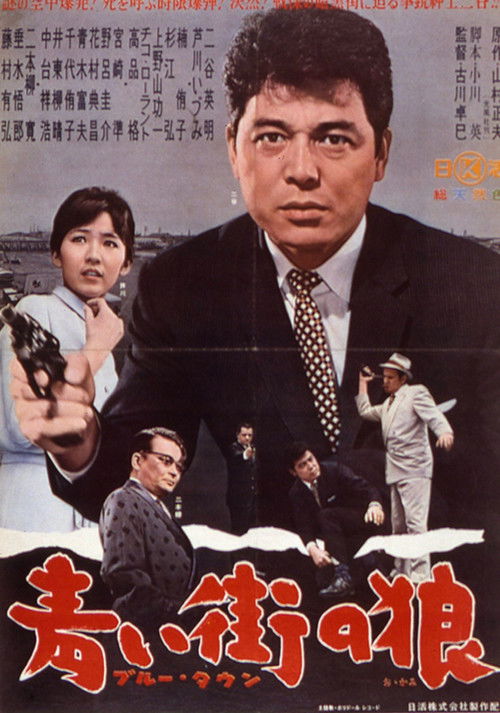
Burūtaun aoi machi no ōkami
Plot
1962 Japanese movie
Get the Weekly Woke Watchlist
New and trending movies scored for woke bias, preachy messaging, and forced political themes — before you waste your evening.
No spam. One useful email per week.
Overall Series Review
Categorical Breakdown
The film is a Japanese action drama focused on characters in a local Japanese setting. Character merit and individual struggle define the plot. The concept of vilifying "whiteness," race-swapping, or lecturing on systemic oppression based on immutable characteristics is entirely irrelevant to the film's time, place, and genre.
The film operates within a Japanese cultural context. Any critique is limited to local issues, such as organized crime or corruption, and is not a fundamental attack on the nation's heritage or civilization. The narrative maintains respect for traditional concepts of loyalty and justice.
Gender dynamics are traditional for a 1960s Japanese action film. Female characters provide support or motivation, and the male lead's masculinity is not portrayed as toxic or bumbling. The narrative does not feature the modern "Girl Boss" archetype or promote anti-natalist messaging.
As a 1962 Japanese crime film, the structure is fundamentally heteronormative. The traditional male-female pairing is the unquestioned standard, and sexuality is a private matter. There is no centering of alternative sexualities, deconstruction of the nuclear family, or lecturing on gender theory.
The movie follows a moral structure, often based on a code of honor or personal justice within a crime setting, which implies an objective moral law. The film is largely secular in a Japanese context, with no narrative focus on demonizing Christianity or promoting pure moral relativism as a thematic core.
Get the Weekly Woke Watchlist
New and trending movies scored for woke bias, preachy messaging, and forced political themes — before you waste your evening.
No spam. One useful email per week.