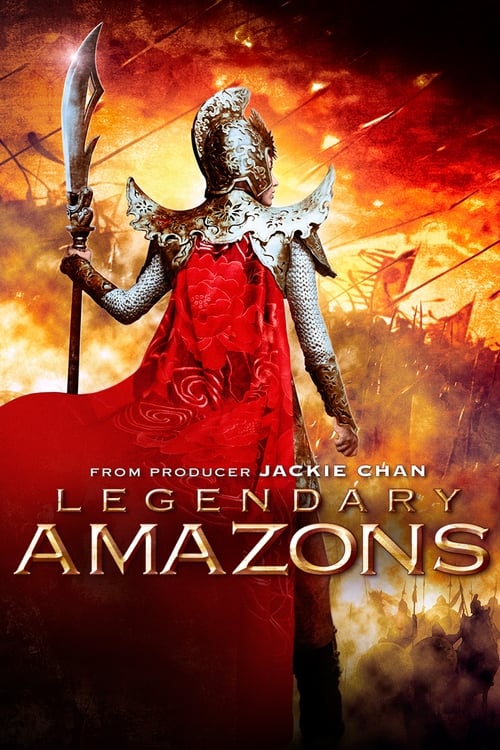
Legendary Amazons
Plot
In 11th century China, the Emperor Renzong reigns his country poorly, neglecting state affairs while the government sinks into corruption and war rages at his borders, whose only protection left is the famous Yang clan. However, when the last man of the family falls, leaving the country open to its invaders, the clan’s formidable women take up arms to lead the army to victory and seek vengeance against corrupt officials.
Get the Weekly Woke Watchlist
New and trending movies scored for woke bias, preachy messaging, and forced political themes — before you waste your evening.
No spam. One useful email per week.
Overall Series Review
Categorical Breakdown
The entire cast and setting are culturally authentic to the Chinese historical folklore they adapt. The conflict centers entirely on the military and political merit of the Yang clan in defending the nation from invaders and corruption. There are no elements of anti-white vilification, forced diversity, or a lecture on intersectional hierarchy, as the focus is on a purely Chinese cultural and historical conflict.
The central dramatic conflict is the multi-generational Yang clan demonstrating staunch loyalty and making the ultimate sacrifice to defend their country and its institutions, including their family and the Song Dynasty. The narrative explicitly respects the sacrifices of ancestors and frames the Yang women as the shield against both chaos (the invaders) and corruption (the poor government), directly championing traditional Chinese civilizational values.
The movie features a multi-generational force of female warriors leading the army after the men of the family are killed, which elevates female agency in a typically male domain. However, the women are defined as wives, mothers, and widows who act to protect their family's honor, their son's life, and their nation’s existence, grounding their power in duty to the established family unit and dynasty rather than an anti-natalist or anti-male message. The men who fail are corrupt officials or a single inexperienced heir, serving to justify the women's complementary role as defenders.
The narrative is a historical military epic focused on family lineage, loyalty, and martial action. The central dramatic stakes revolve around the continuation of the family line and the defense of the state by the wives and mothers of the fallen generals. No themes related to alternative sexualities, gender ideology, or the deconstruction of the nuclear family are present.
The entire moral framework of the story rests on objective moral law, with characters driven by absolute concepts of honor, duty, and national loyalty. The Yang clan is a source of strength, fighting against clear moral evils like treachery, corruption, and invasion. There is no hostility toward religion or an endorsement of moral relativism; the morality is entirely transcendent.
Get the Weekly Woke Watchlist
New and trending movies scored for woke bias, preachy messaging, and forced political themes — before you waste your evening.
No spam. One useful email per week.