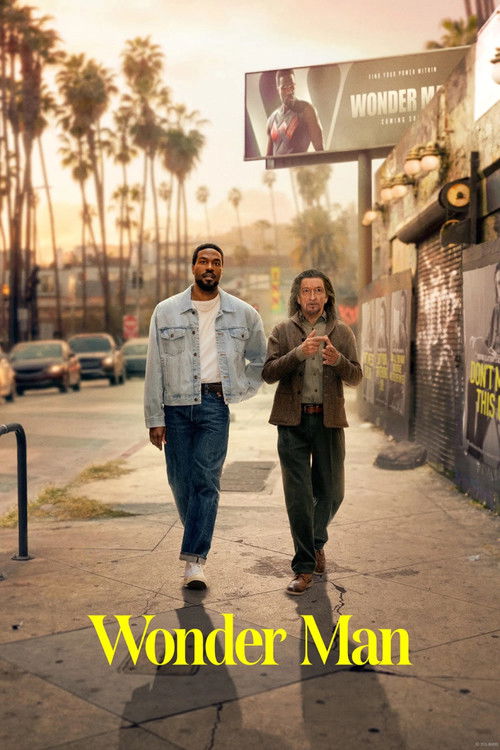
Wonder Man
Season 1 Analysis
Season Overview
Aspiring Hollywood actor Simon Williams is struggling to get his career off the ground. During a chance meeting with Trevor Slattery, an actor whose biggest roles may be well behind him, Simon learns that legendary director Von Kovak is remaking the superhero film "Wonder Man." These two actors at opposite ends of their careers doggedly pursue life-changing roles in this film as audiences get a peek behind the curtain of the entertainment industry.
Season Review
Categorical Breakdown
The main character, Simon Williams/Wonder Man, a historically white comic figure, is cast with a Black actor (a high-profile race-swap, or 'Historical race-swapping'). Simon’s brother is also race-swapped. The core conflict is rooted in a systemic oppression narrative, where Simon's superhuman identity is viewed as a threat and actively suppressed by an institution (DODC/Hollywood 'Doorman Clause'). The narrative frame utilizes immutable characteristics (superhuman status, which serves as a proxy for the 'other') to drive the plot's central conflict.
The series focuses its satirical critique on the specific *industry* of Hollywood and the culture of celebrity, which is framed as superficial and anxious. It does not condemn Western civilization, the nation, or ancestors broadly. Trevor Slattery's arc explicitly involves personal redemption and proving his worth to his mother, celebrating a desire for a positive legacy.
Female characters, such as Simon's agent Janelle Jackson, are portrayed as competent, successful professionals. Simon's mother is shown as a loving, supportive, and sincere figure, which celebrates a positive family dynamic. The plot does not center on 'Girl Boss' tropes, nor does it feature emasculating men or anti-natalist messaging. The main story is a male-centric buddy comedy.
The show does not introduce any noticeable LGBTQ+ themes, character arcs, or commentary on sexual or gender ideology. The focus remains on heterosexual relationships (Simon's ex-girlfriend Vivian) and the platonic friendship between the two male leads. The structure is normative, without lecturing on alternative sexualities or deconstructing the nuclear family.
The show promotes a light moral worldview, extolling positive virtues such as friendship, loyalty, and sobriety. Trevor Slattery's major character decision involves a transcendent moral choice—a selfless act of sacrifice to protect his friend. The narrative conflict is secular (DODC, Hollywood), not anti-religious, and no major figures are portrayed as evil or bigoted due to traditional faith.