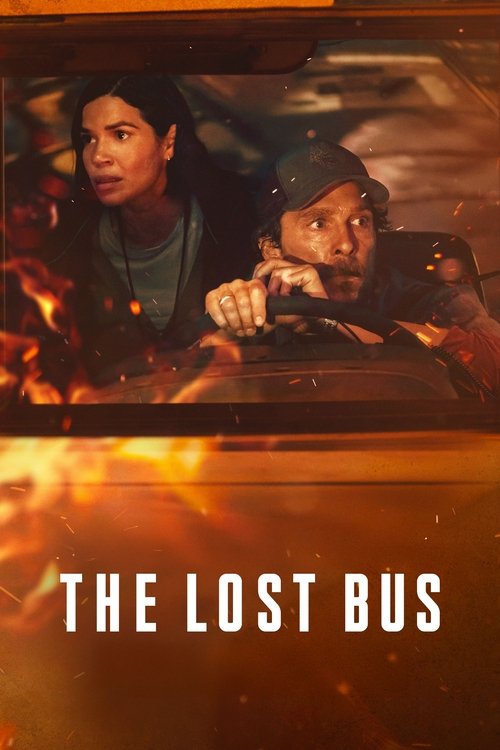
The Lost Bus
Plot
A determined father risks everything to rescue a dedicated teacher and her students from a raging wildfire.
Get the Weekly Woke Watchlist
New and trending movies scored for woke bias, preachy messaging, and forced political themes — before you waste your evening.
No spam. One useful email per week.
Overall Series Review
Categorical Breakdown
The teacher, Mary Ludwig, is portrayed by a Latina actress, America Ferrera, despite the real-life person being white, which forces a key element of intersectional diversity into a historically based narrative. The main hero, bus driver Kevin McKay, is a white male who is the focus of the heroic redemption arc, counterbalancing the narrative focus from being purely a lecture on identity or 'whiteness' being vilified.
The film emphasizes the individual resilience and sacrificial heroism of people protecting their community and children during a catastrophic event. It avoids framing American civilization as fundamentally corrupt. While a critique of institutional failure from the power company (PG&E) is present, the story champions local courage and a fight for home, not hostility toward heritage.
The female co-lead, Mary Ludwig, is a dedicated, highly competent character who is an equal partner in the survival effort. The male lead, Kevin McKay, is initially portrayed as a 'loser and a screwup' who must earn his redemption and is not perfect instantly. His role is masculine and protective, centered on driving the bus to safety. The man and woman work as a complementary team in the crisis without emasculating the male hero.
The plot focuses entirely on the disaster and the survival efforts of the bus driver, teacher, and children. Alternative sexualities or gender ideology are not introduced or centered in the narrative. The nuclear family structure is present in the background as the goal of the rescue (reuniting children with parents).
The story is fundamentally one of sacrificial heroism and redemption, which aligns with transcendent morality. Reviews describe the film as 'redemptive' and capturing the 'beauty of sacrificial heroism.' There is no evidence of hostility toward religion or a narrative embrace of moral relativism.
Get the Weekly Woke Watchlist
New and trending movies scored for woke bias, preachy messaging, and forced political themes — before you waste your evening.
No spam. One useful email per week.