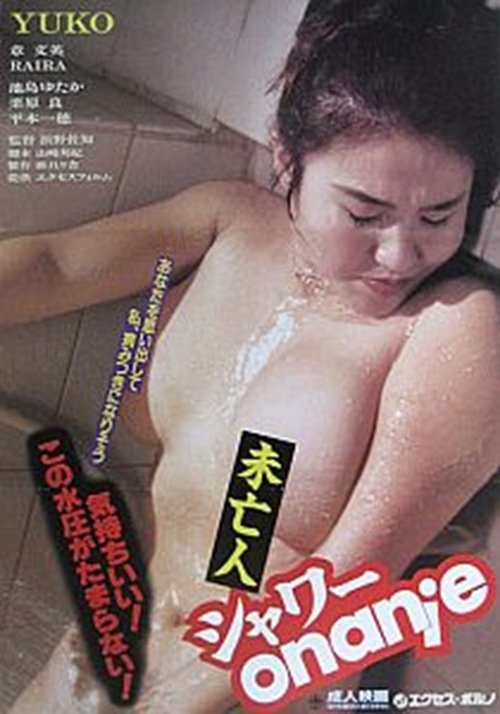
Widow Shower Onanie
Plot
A pinku take on Mary Poppins.
Get the Weekly Woke Watchlist
New and trending movies scored for woke bias, preachy messaging, and forced political themes — before you waste your evening.
No spam. One useful email per week.
Overall Series Review
Categorical Breakdown
The film is a 1993 Japanese production and does not engage with concepts of vilification of 'whiteness' or intersectional hierarchy. Character interactions are driven by sexual scenarios and domestic roles, not by race or systemic oppression.
The narrative is contained within a specific domestic erotic fantasy and does not offer a critique of Japanese culture, history, or Western civilization. There is no attempt to frame the home culture as fundamentally corrupt or to demonize ancestors.
The female lead is a figure of powerful sexual agency and control, placing her far from a bumbling victim. However, the plot's function is to sexually dismantle the traditional roles of wife and mother, which is anti-family, though not explicitly a 'career-is-only-fulfillment' narrative. The score reflects the disruption of complementarity and motherhood.
The primary focus is on heterosexual non-normative sexuality and sexual scenarios within a domestic setting. The film does not center alternative sexualities, nor does it lecture on gender ideology or frame biological reality as bigotry. The nuclear family structure is satirized sexually, not ideologically deconstructed.
As a genre film focused on erotic scenarios, the narrative is agnostic toward religion. There is no hostility toward Christianity or traditional faith. Morality is subjective in the context of the sexual fantasy, but this is a function of the genre rather than an ideological promotion of moral relativism.
Get the Weekly Woke Watchlist
New and trending movies scored for woke bias, preachy messaging, and forced political themes — before you waste your evening.
No spam. One useful email per week.