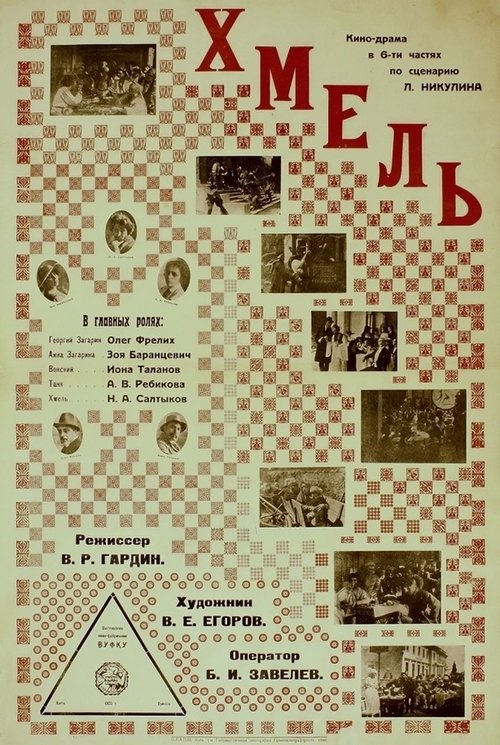
Ataman Khmil'
Plot
Revolutionary melodrama based on Lev Nikulin's story "Хміль". 1917. The main character of the film - a "bourgeois intellectual" - does not sympathize with any side and avoids revolutionary events. However, as a result of a series of adventurous adventures, love intrigues and communication with the people, he goes over to the side of the proletariat.
Get the Weekly Woke Watchlist
New and trending movies scored for woke bias, preachy messaging, and forced political themes — before you waste your evening.
No spam. One useful email per week.
Overall Series Review
Categorical Breakdown
The plot's core is the conversion of a “bourgeois intellectual” to the “side of the proletariat.” This frames class and economic standing as the primary determinant of character, moral righteousness, and political alignment. The intellectual/bourgeois class is depicted as inherently flawed and politically compromised, while the proletariat is the source of ethical truth. The narrative functions as a lecture on class privilege and systemic oppression that is overcome only by radical political alignment.
The revolutionary theme inherently demands the protagonist abandon his home culture and institutions. The pre-Soviet Russian society, represented by the intellectual and 'bourgeois' class, is framed as fundamentally corrupt and a barrier to moral development. The protagonist's conversion is a rejection of his ancestral, national civilization in favor of the new, ideologically superior revolutionary order.
The plot involves “love intrigues,” but the political conversion of the male intellectual is the central driving force. While early Soviet cinema often promoted women’s political and professional involvement, challenging traditional domestic roles, the main focus is not on gender dynamics. The score reflects the historical context of the time where revolutionary ideology challenged the 'bourgeois' family structure, yet lacks specific 'Girl Boss' or anti-natalism tropes without more plot detail.
The film is a 1924 revolutionary melodrama focused on class struggle. There is no evidence to suggest that sexual identity is a central theme or that the narrative engages with modern queer or gender ideology. The structure is focused entirely on political alignment, leaving the sexual framework to follow a normative structure where sexuality remains private and secondary to the central political conflict.
As an early Soviet film promoting the Bolshevik revolution, the narrative inherently adopts an anti-theist position. Traditional religion, particularly Christianity as embodied by the Russian Orthodox Church, was officially denounced as a tool of 'bourgeois' oppression and an enemy of the revolution. The protagonist’s political conversion is a secular, materialist process that replaces spiritual faith with revolutionary conviction and a new objective moral law dictated by the party.
Get the Weekly Woke Watchlist
New and trending movies scored for woke bias, preachy messaging, and forced political themes — before you waste your evening.
No spam. One useful email per week.