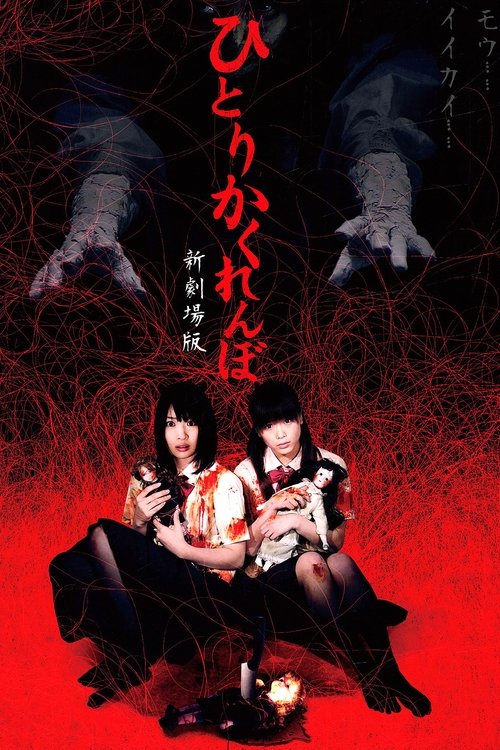
Creepy Hide and Seek
Plot
when rumors about students who played at hitori Kakurenbo (sort of hide and seek alone with a ghost) propagate in high school, Shiori can no longer join his older brother Motoya. On his way to the apartment he is supposed to live, she found an empty room. But an internet forum unearthed on the computer of her brother leads her to believe that the disappearance of the latter may well be linked to this sordid game of hide and seek. Despite attempts by her boyfriend Noboru and his best to reassure her friend Yuko, Shiori is beginning to be convinced that something he wants her too and tries to track down. It will then turn to Shiraishi, a former classmate of her brother, trying to understand what is happening and return Motoya.
Get the Weekly Woke Watchlist
New and trending movies scored for woke bias, preachy messaging, and forced political themes — before you waste your evening.
No spam. One useful email per week.
Overall Series Review
Categorical Breakdown
The film is a Japanese production set in Japan featuring an entirely Japanese cast. The plot conflict is supernatural and revolves around a cursed game, not around race, class, or intersectional power dynamics. Character worth is determined by their competence in navigating the horror, reflecting a universal meritocracy of survival within the narrative's own reality.
The film is based on a Japanese urban legend and is entirely centered on localized Japanese occult lore. The narrative does not criticize, demonize, or express hostility toward Western civilization, its ancestors, or its core institutions. The story respects the localized traditional rules of the game and the spiritual threat it represents.
The main character, Shiori, is a female protagonist who drives the plot by proactively investigating her brother's disappearance, which shows female agency. Her male counterparts, such as her boyfriend Noboru, are present but do not take the lead in solving the central mystery. The film's themes are not concerned with anti-natalism or careerism, nor is Shiori presented as a flawless 'Girl Boss' figure designed to lecture on female superiority; she is simply an active protagonist in a horror scenario.
The narrative makes no attempt to center alternative sexual identities or deconstruct the traditional male-female pairing or nuclear family structure. Shiori has a boyfriend, Noboru. The film focuses on the horror of the occult game and the disappearance of a family member, keeping the characters’ private sexual lives entirely off the screen and unexamined by any theoretical lens.
The core of the film's premise is a ritual to summon a powerful malevolent spirit, which immediately establishes the existence of a transcendent, spiritual reality beyond the material world. The narrative confirms an objective moral law where playing the occult game is inherently evil and leads to catastrophic consequences. Faith and traditional religious objects are even mentioned in the lore as potential defenses against the spiritual threat.
Get the Weekly Woke Watchlist
New and trending movies scored for woke bias, preachy messaging, and forced political themes — before you waste your evening.
No spam. One useful email per week.