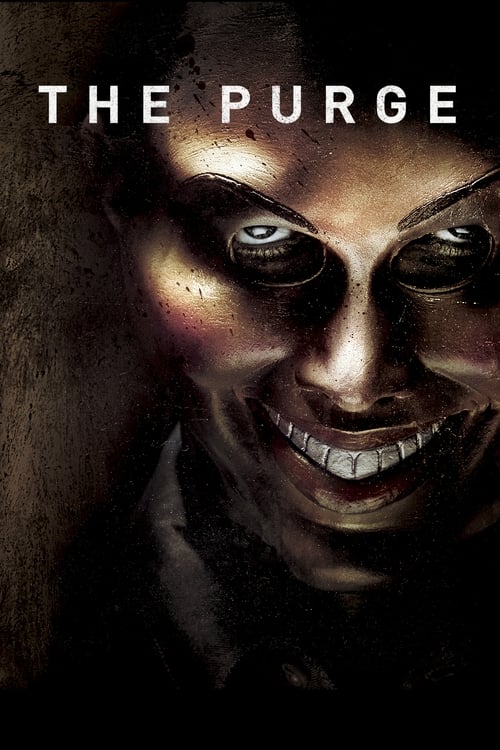
The Purge
Plot
Given the country's overcrowded prisons, the U.S. government begins to allow 12-hour periods of time in which all illegal activity is legal. During one of these free-for-alls, a family must protect themselves from a home invasion.
Get the Weekly Woke Watchlist
New and trending movies scored for woke bias, preachy messaging, and forced political themes — before you waste your evening.
No spam. One useful email per week.
Overall Series Review
Categorical Breakdown
The plot's central conflict explicitly relies on an intersectional hierarchy of class and race, where the wealthy elite—often depicted as white—target and murder the poor, who are disproportionately minorities, to cleanse the population. The film frames the Purge as a mechanism of systemic oppression and vilifies the wealthy, privileged characters who participate in it. The black, wounded 'Stranger' is targeted explicitly by the white, affluent student-intruders as their rightful 'prey' due to his socioeconomic status, directly lecturing on privilege.
The narrative is an unmistakable condemnation of the American civilizational structure and its 'New Founding Fathers,' portraying the established, capitalist government as fundamentally corrupt, instituting state-sanctioned violence as a necessary national ritual. The institution of the Purge is a Malthusian policy designed for the culling of the 'lumpen poor,' painting the American system and its leadership as genocidal and evil. The suburban home itself is presented as a hypocritical fortress that shields the wealthy from the violence their own class creates.
The gender dynamic positions the mother, Mary Sandin, and the children as the moral compass of the family, forcing the father, James Sandin, to confront his own moral corruption and willingness to sacrifice the Stranger. The male patriarch is morally compromised by the system he profited from, while the woman makes the ultimate moral decision to cease the violence, fitting the trope where the female must be the moral guide for the flawed, emasculated male.
The film maintains a normative structure, focusing solely on the traditional nuclear family unit and the immediate dangers of the Purge. There is no inclusion of alternative sexualities, gender ideology, or commentary on LGBTQ+ issues in the plot.
The movie is not a direct attack on Christianity, but it frames the state-sanctioned violence of the Purge as a 'civil religion' that involves the 'sacralization of the federal government' and its 'New Founding Fathers'. This secular veneration and the core premise of state-sanctioned murder for a better society promote a system of profound moral relativism, where objective truth and moral law are suspended by government decree.
Get the Weekly Woke Watchlist
New and trending movies scored for woke bias, preachy messaging, and forced political themes — before you waste your evening.
No spam. One useful email per week.