Arrow
Season 2 Analysis
Season Overview
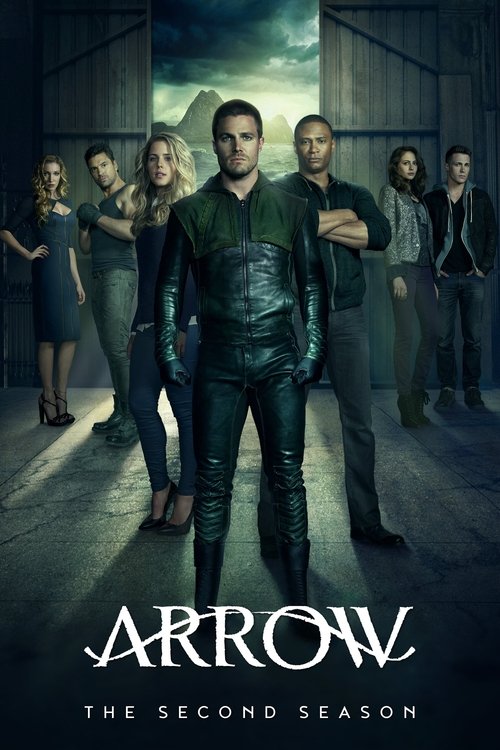
Sworn to fight crime and corruption in his city, Oliver Queen – with the help of tech-savvy Felicity Smoak and his iron-fisted right hand, John Diggle – narrowly averts the rich and powerful's "Undertaking" as the Dark Archer rocked Queen's world in the first season finale of ARROW. But who's going to pick up the pieces? In Season Two, see how Oliver Queen goes from Hood to Hero!
Season Review
Categorical Breakdown
Characters are overwhelmingly judged by their skill, competence, and moral choices, which aligns with universal meritocracy. John Diggle's race is irrelevant to his role as Oliver’s bodyguard and conscience, and he is depicted as highly competent. The villains are diverse, with white characters Sebastian Blood and Anthony Ivo serving as main antagonists alongside the white/Māori Slade Wilson. There is no lecturing on systemic oppression or white privilege; the critique is focused on the corruption of the wealthy elite of Starling City, which Oliver is actively trying to redeem.
The narrative is centered on Oliver's desire to save his city and redeem his family's name after his father's and mother’s involvement in massive corruption. The primary motivation is one of civic responsibility and protecting the home, treating local institutions as worth saving and fighting for. The Queen family’s wealth is the source of the initial problem, but the ultimate goal is to fix and uplift the society, not deconstruct or demonize the civilization itself. This is a story of gratitude for the home that is worth defending.
The season contains mixed messages regarding gender. Felicity Smoak is an indispensable, genius-level computer scientist, but her character arc increasingly emphasizes romantic drama, and her primary function is to serve the male protagonist. Sara Lance is a highly skilled, formidable fighter, an archetypal 'Girl Boss' warrior, but her purpose in the flashback is to be 'fridged' (killed/traumatized) to fuel the main male villain’s revenge plot, and her present-day return is tied to Oliver’s personal guilt. This tension between highly competent women and their function in a male-centered plot results in a middling score.
The score reflects the centering of an alternative sexuality through a main character. Sara Lance (The Canary) is revealed to have been in a romantic relationship with Nyssa al Ghul, the daughter of the leader of the League of Assassins. This establishes a main character as bisexual and features a non-traditional male-female pairing in a central arc. The sexual identity is not the character's defining trait, but it is explicitly present and normalized within the show's action-focused structure.
There is no focus or hostility directed toward traditional religion. The morality of the show is based on a secular higher moral law (Oliver's commitment to stop killing) and objective truth (right vs. wrong). The villains are motivated by personal revenge, power, and distorted social justice (Sebastian Blood's self-proclaimed 'salvation' of the city), all of which are secular or pseudospiritual concepts. Traditional faith is absent or ignored, but it is not actively vilified.