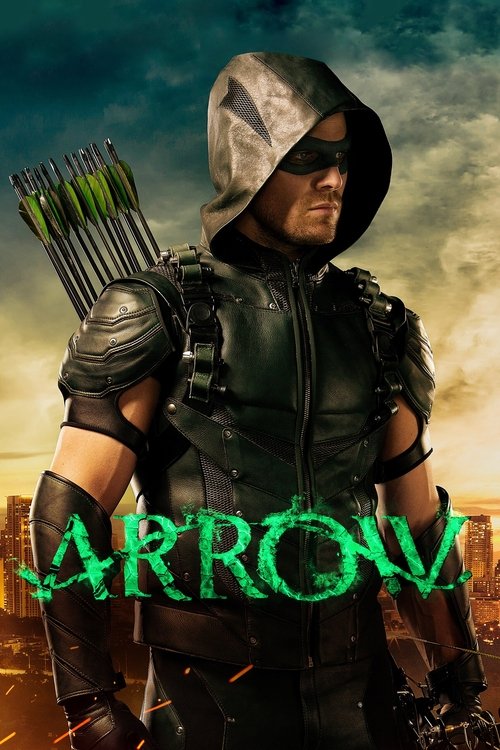
Arrow
Season 4 Analysis
Season Overview
After defeating his most formidable foe to date, Oliver Queen left Starling City with the hopes of beginning a new life with longtime flame Felicity Smoak. But will Oliver ever truly be able to leave behind his past as the Arrow, and, if so, what becomes of his team? Will Diggle, Thea, and Laurel continue the crusade? And with Malcolm Merlyn leading the League of Assassins is anyone really safe?
Season Review
Categorical Breakdown
A high-ranking Black female character, Lyla Michaels, is elevated to the head of a major government agency, A.R.G.U.S.. A new prominent character, Curtis Holt, is introduced as a Black, gay technical genius who instantly earns a place on the team, embodying an intersectional profile. The central white male protagonist, Oliver Queen, is repeatedly portrayed as morally compromised and secretive, while non-white and female characters are often positioned as his moral superiors. Character merit remains a factor, but the narrative structure frequently frames the white male's actions as the root of conflict and poor judgment.
The primary setting, Star City, is consistently shown to be fundamentally broken, corrupt, and in need of saving from internal forces like H.I.V.E., which is led by an all-white male villain. This trope frames the city's institutions as corrupt, but the blame is placed on specific evil actors rather than a broad condemnation of Western civilization or heritage. The villain, Damien Darhk, plans for a worldwide apocalypse and a secluded, protected rebuilding, a generic 'destroy and rebuild' villain plot rather than an explicit attack on Western values. The season ultimately concludes with the community rising up and saving itself, reinforcing a degree of civic optimism.
The season is overwhelmingly focused on the female lead, Felicity Smoak, who is elevated to the de facto main character, a 'Girl Boss' with nearly perfect technical skills and moral judgment. Oliver Queen, the male protagonist, is frequently emasculated, depicted as a bumbling liar who must be corrected and saved by Felicity. Felicity is given a scene where she explicitly attributes fault to a man, saying 'Cuz you're a man!'. The controversial death of Laurel Lance/Black Canary, a female comic book legacy character, is seen by many viewers as an act to further elevate the non-superpowered female lead's central importance and drama.
The introduction of the character Curtis Holt is primarily to provide a key team asset who is openly gay and in a married relationship. His sexual identity is presented as a normal, non-private fact of his character and is normalized within the main cast. This move centers an alternative sexuality within the hero group, though it does not deconstruct the concept of marriage itself, merely the traditional male-female pairing.
The core conflict of the season is rooted in mysticism and a struggle between 'dark magic' and the 'power of hope' or 'light'. This framework replaces traditional religious morality with a subjective, non-denominational spiritual force as the source of salvation and objective truth. The villain Damien Darhk's power is occult in nature, which is combated not by faith-based virtue but by Oliver's personal, internal 'light' and the community's collective 'hope'. Traditional, organized religion is completely absent from this moral framework.