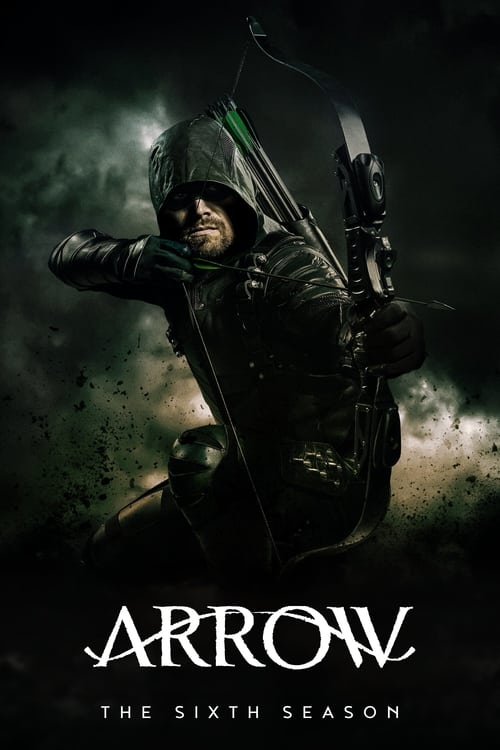
Arrow
Season 6 Analysis
Season Overview
After last season’s emotional showdown between Oliver Queen and Adrian Chase, the focus shifts into uncovering the fate of each and every member of Team Arrow – with their futures left hanging precariously in the balance. Having finally solidified and strengthened his crime-fighting team, the Green Arrow might be forced to rethink his relationships with his “family” in Season 6.
Season Review
Categorical Breakdown
The core of the season revolves around the team fracturing into the 'Original Team Arrow' and 'New Team Arrow,' with the latter consisting predominantly of female and non-white characters. The narrative framing frequently presents the white male leader, Oliver Queen, as the source of the team's conflict and distrust, even when his actions were justified by previous betrayals. Members of the New Team Arrow, including a Hispanic male and a Black male, constantly lecture Oliver on his perceived moral and leadership deficiencies. The final villain is an ethnically diverse drug dealer, Ricardo Diaz, who successfully infiltrates and controls the city's government and judicial systems.
The central conflict is localized and focuses on the corruption and street-level crime in Star City. The narrative does not contain any explicit hostility toward Western civilization, one's home culture, or ancestors. Star City's institutions are depicted as corruptible, but the mission remains centered on protecting the city and its residents, framing the hero's actions as a defense of the community against chaos.
The season contains a strong 'Girl Boss' element through two highly competent female characters, Felicity Smoak and Dinah Drake, who become central to the split. Felicity's intelligence and authority as Overwatch are often juxtaposed against Oliver's perceived leadership shortcomings, positioning the male lead as the one needing guidance. A major subplot involves the redemption of the female villain Black Siren. The conflict frequently involves the male lead's emasculation, as conflicts with female characters consistently frame Oliver as the party who is wrong or lacking in communication, which is a key driver of the team split.
A series regular, Curtis Holt (Mr. Terrific), is openly gay, Black, and a key member of the dissenting 'New Team Arrow.' His identity is an established character trait but is not the primary focus of the season's main plot. The character's inclusion, visibility, and role in actively opposing the white male lead contribute to the progressive dynamic without centering the narrative around alternative sexualities or engaging in gender theory lecturing.
The show is a crime drama that operates primarily in a secular moral space, focusing on vigilante ethics, justice, and personal redemption rather than religion. There is no overt hostility toward traditional religion, but the spiritual vacuum is filled by a subjective, utilitarian moral code where 'Objective Truth' is replaced by 'what is best for the mission' or 'what protects the family.' The show's morality is transcendent only in the sense of a superhero's innate duty to justice, not in a faith-based context.