Arrow
Season 7 Analysis
Season Overview
In Season Seven, Oliver Queen will find himself vulnerable in a way unlike ever before when a mysterious new enemy begins to unravel his work as Green Arrow, forcing him to redeem his name or risk losing everything.
Season Review
Categorical Breakdown
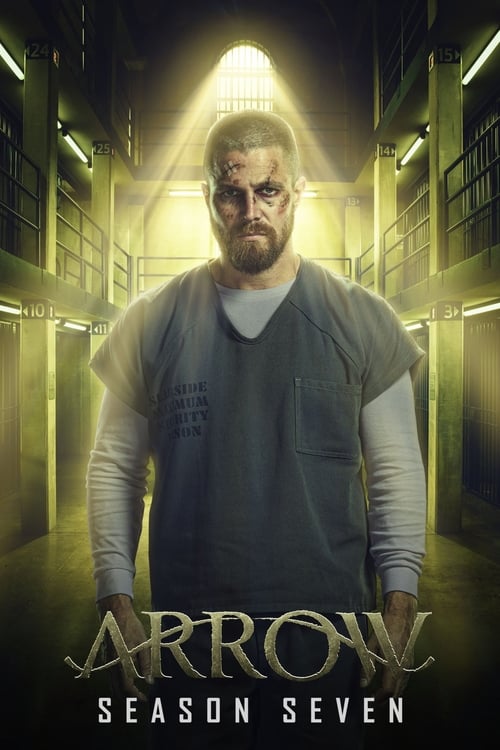
The main hero, a white male, is incarcerated, and the Green Arrow mantle is briefly taken up by Emiko Queen, his newly-introduced half-sister who is a non-white character, effectively race-swapping the role. Her motivation stems from the corruption and secrets of the founding, wealthy Queen family, framing the male protagonist's privilege and ancestral legacy as a source of Star City's systemic problems. Oliver's time in prison focuses on the moral complexity and nuanced humanity of the convicted inmates versus the corruption of the prison guards, suggesting a critique of the justice system and its power dynamics.
The season reinforces hostility toward the 'home' civilization's heritage. The secrets of Oliver's wealthy father, Robert Queen, are revealed to include a hidden, illegitimate non-white daughter, whose existence and subsequent struggle highlight the moral corruption and disregard of the city's elite. The problems of Star City are continually tied to the foundational wrongdoings of the prominent, powerful families, not outside forces. The flash-forwards show the city's future as having devolved into a quasi-fascistic regime, continuing the critique of the city's institutions.
The narrative makes a pointed effort to sideline the male lead by imprisoning him, explicitly to let the female characters take center stage and drive the story. Commentary from the time highlights this move, stating 'the future is female' for the series, which is a key 'Girl Boss' sentiment. Felicity Smoak is transformed from a supportive partner into a darker, more ruthless leader who makes morally difficult, even 'problematic' choices, demonstrating a 'Girl Boss' transformation where female fulfillment is found in career and extreme agency, separate from the male protector.
The score reflects the normalization of alternative sexuality within the main cast. Curtis Holt, an established series regular, is an openly gay man. While this representation is normalized and not central to the main plot, it moves the score past the 1/10 'Normative Structure' as the show treats male-male relationships and non-traditional pairing as standard. There is no clear focus on gender ideology or explicit lecturing on 'queer theory' beyond the presence of established, out characters.
The core season theme is "redemption," which is a term traditionally rooted in religious thought, but the show grounds it entirely in secular, personal, and criminal justice terms. Characters focus on moral relativism, personal choice, and atoning for crimes against humanity or the city, with no reference to a higher, objective moral law or the existence of a spiritual dimension to morality. There is no overt hostility toward religion, but the narrative embraces a spiritual vacuum by finding all moral guidance within human action and feeling.