Arrow
Season 8 Analysis
Season Overview
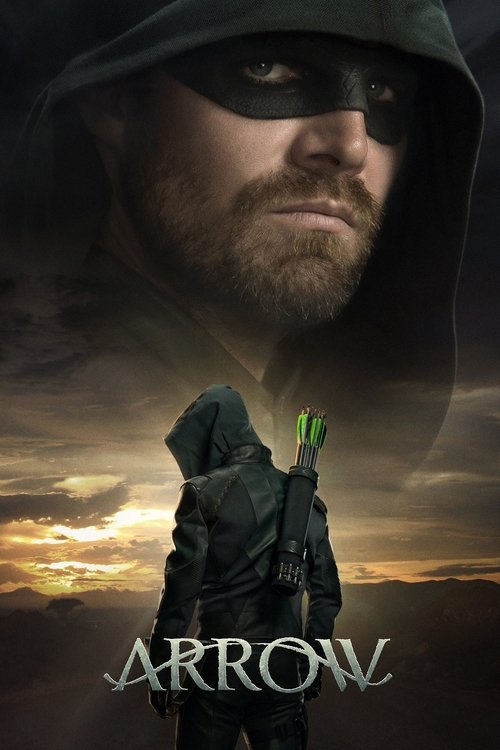
Following the arrival of The Monitor, Oliver Queen left his home, his family, & his team behind to take on his most challenging battle yet, knowing the cost may be his life. But this time it’s not just his city he’s seeking to protect – it’s the entire multiverse. Oliver’s quest will send him on a journey where he is forced to confront the ultimate question: what is the true cost of being a hero?
Season Review
Categorical Breakdown
The core plot focuses on Oliver Queen, a white male, performing the ultimate heroic sacrifice for the multiverse, which centers his merit. However, the future timeline establishes a highly diverse successor team, including a Black male and a white female who takes over the Green Arrow mantle. The leadership of the future team is split between a female and a Black male, indicating a preference for diversity over a purely colorblind casting choice for the hero's direct successor.
The season's conflict is the 'Crisis on Infinite Earths,' an apocalyptic event where the hero must sacrifice everything to save reality. This narrative is fundamentally an act of ultimate defense and preservation of existence. The plot emphasizes loyalty to one's team, family, and world. The hero's final act is explicitly about saving everyone, showing a complete rejection of self-hatred or deconstruction of the world he is defending.
The female characters in the series are extremely powerful and are given male-hero mantles. The future is established with Mia Queen, the protagonist’s daughter, who is instantly an expert fighter and takes on the Green Arrow identity, which is an explicit transfer of the male hero role to a female. Dinah Drake is established as the Captain of the Star City Police Department. This strong emphasis on a perfect 'Girl Boss' successor and powerful female leadership pushes the score high despite the central male hero's sacrifice.
The main plot is an intensely personal and existential journey for Oliver Queen, focusing on his heterosexual marriage and family legacy (wife, son, daughter). Established LGBTQ+ characters from earlier seasons are present but occupy supporting roles in the main action of this final season. The network has a known agenda of centering alternative sexualities in its universe, but this specific season finale keeps the primary focus on the normative, traditional family unit.
The conflict is a cosmic battle against a transcendent force of anti-matter, The Anti-Monitor. Oliver Queen becomes 'The Spectre,' a mystical, quasi-religious being, reinforcing a concept of a higher moral truth and a spiritual dimension to existence. Oliver's sacrifice is a clear moral good for the benefit of all creation. The narrative replaces traditional religion with comic book cosmology, but the theme of a selfless sacrifice for an objective moral purpose aligns with a transcendent law.