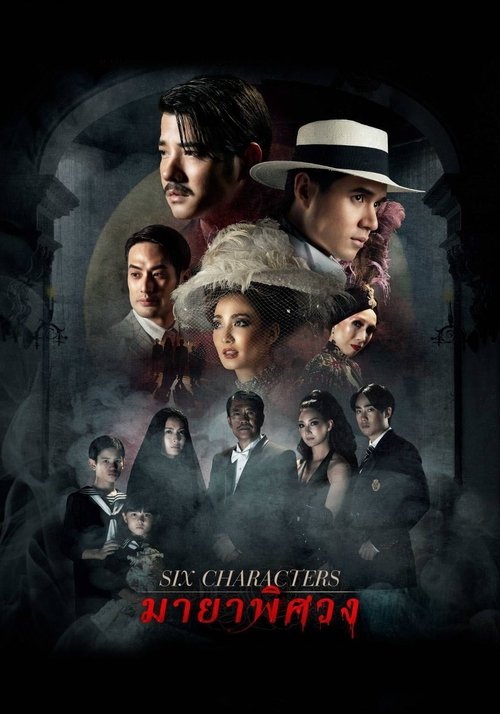
Six Characters
Plot
On a set filled with tension, a nervous director tries to shoot a horror movie. Meanwhile, six strangers suddenly appear who tell their story, explaining that they are the characters of the script left by a dead author.
Get the Weekly Woke Watchlist
New and trending movies scored for woke bias, preachy messaging, and forced political themes — before you waste your evening.
No spam. One useful email per week.
Overall Series Review
Categorical Breakdown
The film's primary focus is on the Characters' search for an identity that is fixed and 'more real' than the actors or the author's script, which is a philosophical and meta-theatrical concern, not a lecture on intersectional hierarchy or privilege. The casting is ethnically authentic for a Thai production and does not feature any politically motivated race-swapping or vilification of one race over another. Characters are defined by their tragic fate and psychological conflict.
The film does not express hostility toward its own culture or Western civilization. The director's segment includes a detail where he attempts to appease local 'house spirits' with incense, which is a nod to traditional, culturally authentic Thai superstition. The core melodrama is a universal depiction of familial breakdown and shame, not a deconstruction of national heritage, placing its critique on human nature rather than civilizational failure.
The score reflects the content of the Characters' melodrama, which depicts the Mother and Stepdaughter as victims of a patriarchal and dysfunctional family unit. The Stepdaughter is forced into prostitution by a madam, and the Mother is defined by her roles as a wife and mother who is abandoned and later returns to shame. While this is a critique of patriarchy, it is a classic tragic melodrama rooted in the early 20th century, not a modern 'Girl Boss' narrative. The female characters are tragic victims, not instantly perfect heroes.
The narrative's central conflict revolves entirely around the 'nuclear family' dynamic—a Father, Mother, and their respective children—and the trauma of heterosexual infidelity and a near-incestuous encounter. There is no presence of centering alternative sexualities, deconstructing the nuclear family in an ideological sense, or discussion of gender identity in the plot details available. The focus is strictly on traditional family tragedy.
The original play deals with the themes of a meaningless, absurd world and the loss of 'fixed moral codes previously enforced by religion,' which can be seen as a spiritual vacuum. However, the film is not actively hostile toward faith. The Thai director's actions on the film set demonstrate an acknowledgment of local spiritual beliefs. Morality is subjective in the sense that the Characters each have their own 'truth' of the events, which is a feature of the original play's philosophical nature, not a progressive attack on religion.
Get the Weekly Woke Watchlist
New and trending movies scored for woke bias, preachy messaging, and forced political themes — before you waste your evening.
No spam. One useful email per week.