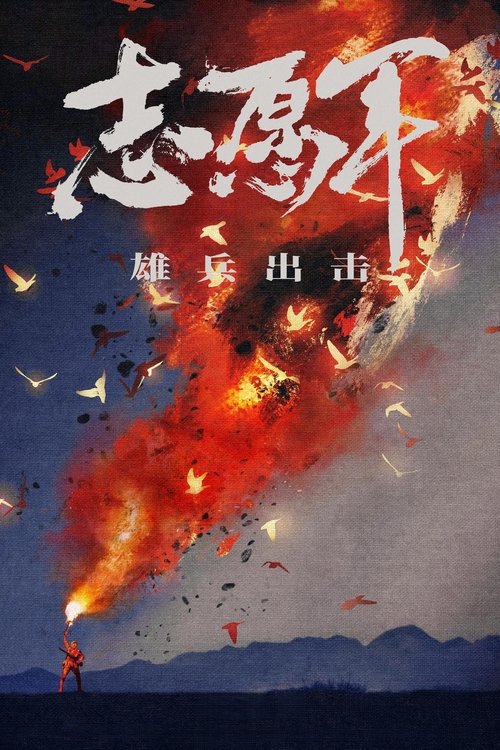
The Volunteers: To the War
Plot
In the early days of the founding of the People's Republic of China in 1949, New China was faced with "internal and external troubles". Since the outbreak of the Korean Civil War, the U.S. military has repeatedly provoked the border between China and North Korea, and civilians have been brutally bombed. In order to maintain the hard-won peace and long-term stability for generations, in October 1950, the Chinese People's Volunteers entered North Korea, and the "Resist US Aid Korea" war kicked off.
Get the Weekly Woke Watchlist
New and trending movies scored for woke bias, preachy messaging, and forced political themes — before you waste your evening.
No spam. One useful email per week.
Overall Series Review
Categorical Breakdown
Characters are judged by their dedication, loyalty, and sacrifice for the collective national cause, reflecting a form of meritocracy in action. The focus is on ideological and national identity rather than internal intersectional hierarchies. The primary vilification is external, directed at the 'arrogant racists' of the opposing US forces, a vilification based on a civilizational and national axis, not an internal critique of the protagonist group.
The film functions as a pure expression of civilizational gratitude and defense, presenting the newly founded nation as a shield against external chaos and threats. Marshal Peng Dehuai’s speech frames the soldiers' 'sacrifice' as a necessary price for the long-term peace of future generations, directly respecting the sacrifices of ancestors and defending the core institution of the nation.
The main focus is on the male-dominated military and political leadership of the 1950s, with key figures like Mao Zedong and Peng Dehuai driving the strategic plot. Female characters serve in supportive, though important, roles such as diplomat and interpreter. The film does not feature 'Mary Sue' or 'Girl Boss' tropes, nor does it contain any observable anti-natal or anti-family messaging, instead emphasizing the generational continuity of the nation.
The narrative is centered on a historical, existential military conflict and the political maneuvering surrounding it. There is no presence of alternative sexualities, queer theory, or gender ideology. The structure remains normative, focusing on the traditional political and military order required for national survival in wartime.
The moral framework is objective and transcendent, anchored entirely in the supreme value of national and Communist ideological conviction. The Chinese heroes are driven by 'the power of conviction or belief' and a clear, objective mission. The film exhibits no hostility toward traditional religion and replaces moral relativism with the ultimate truth of patriotic sacrifice.
Get the Weekly Woke Watchlist
New and trending movies scored for woke bias, preachy messaging, and forced political themes — before you waste your evening.
No spam. One useful email per week.