Hannibal
Season 1 Analysis
Season Overview
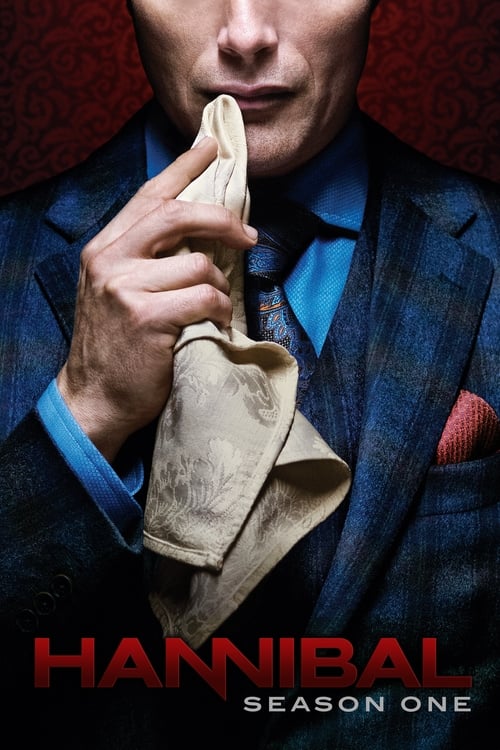
After a particularly grueling case hunting a serial killer known as the Minnesota Shrike, Will Graham threatens to walk away. Jack Crawford, the head of the FBI's Behavioral Science Unit, desperately needs Will on his team to break the tough cases, so he enlists Dr. Hannibal Lecter, to ensure Will's mental well-being. Unbeknownst to Will, Hannibal also has a particular insight into these horrible crimes and the psychopaths who commit them. As Will hunts down brutal killers, he is unknowingly sitting across from the most gifted killer of them all.
Season Review
Categorical Breakdown
Characters are generally judged by their competence or their degree of 'rudeness,' which Hannibal judges, rather than group identity. The plot is not focused on lecturing about systemic oppression or privilege. However, established literary characters like Jack Crawford and Dr. Chilton are race-swapped, and a character like Dr. Alana Bloom is gender-swapped, clearly indicating a concerted effort to insert diversity into the cast.
The series does not explicitly attack the American system or nation, as the FBI serves as the backdrop institution attempting to enforce order. However, the protagonist, Will Graham, is a troubled American man contrasting with the sophisticated, hyper-cultured European-born antagonist, Dr. Lecter, who constantly critiques American vulgarity and lack of taste. The narrative frames high European culture and aesthetic genius as superior to the messy, common American experience, even if the high culture is possessed by a monster.
Several key male characters from the source novels, such as Alan Bloom and Freddie Lounds, are intentionally gender-swapped to create 'strong women' and round out the cast, aligning with the 'Girl Boss' trope. These female characters are competent and primarily defined by their careers as a psychiatrist and a journalist. The creator specifically stated that he avoided depicting sexual violence as a conscious feminist choice.
The core relationship between Will Graham and Hannibal Lecter is based on an intense psychological intimacy and obsession. This relationship, termed 'Hannigram' by fans, is widely interpreted as queer subtext by critics and has been confirmed by the showrunner as a romantic/erotic dynamic. This unspoken but pervasive centering of a non-normative male-male bond provides the narrative's emotional engine and is a deconstruction of traditional male-female pairings, positioning the show within the 'abstract queer media' framework.
The primary antagonist, Hannibal Lecter, is an explicit purveyor of moral relativism and a rejection of objective truth. His actions are not driven by pathology alone but by a self-styled, aesthetic moral code where he views himself as 'above humans,' a position of personal godhood. He frames human ethics and societal laws as merely 'adaptations of humanity' and 'subjective power dynamics,' fitting the 10/10 criteria of transcendent morality being denied by the central villain's philosophical viewpoint.