Hannibal
Season 2 Analysis
Season Overview
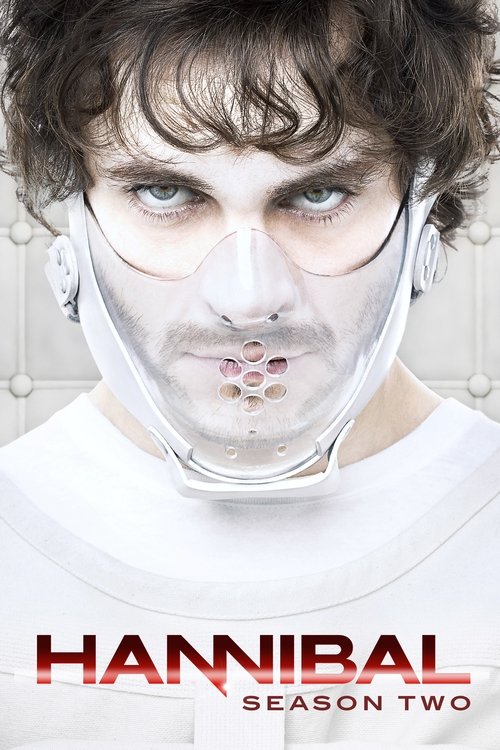
When damning evidence shows up at the FBI that implicates Will in a string of grisly murders, he is immediately placed under the care of the Baltimore State Hospital for the Criminally Insane. As Will tries to assure Jack of his innocence, he also attempts to convince him of the identity of the real killer.
Season Review
Categorical Breakdown
Characters are judged primarily by their psychological depth and their capacity for beautiful violence, not their immutable characteristics. There is a degree of diversity achieved by 'race-swapping' the head of the FBI, Jack Crawford, to be African American. The roles of journalist and psychologist are 'gender-swapped' from the source material. However, the central conflict remains a psychological one between two white men, and the narrative does not rely on intersectional hierarchy or lectures on systemic oppression.
The main villain, Hannibal Lecter, is portrayed as an aesthetic elitist whose personal moral code includes a disdain for 'discourteous people, particularly entitled Westerners'. He sees himself as a vicious crusader for a twisted 'moral propriety' that critiques and punishes the perceived vulgarity and entitlement of modern Western society. This philosophy, though coming from a cannibal, aligns with hostility toward the home culture's values and ancestors.
The show features several prominent female characters who are 'gender-swapped' from the source material and are powerful, highly competent professionals. Female characters like Freddie Lounds and Alana Bloom are ambitious, ruthless, or highly capable figures in law enforcement and psychiatry. The ruthless journalist Freddie Lounds is characterized by traits, such as being 'monstrously ambitious,' that are traditionally seen as masculine and rewarded in male characters. The story's focus is on professional achievement, psychological conflict, and survival, sidelining traditional family life and not celebrating motherhood.
The core, obsessive relationship between the two male protagonists, Will Graham and Hannibal Lecter, is the central dramatic engine and is widely interpreted as a romantic connection. The showrunner explicitly framed Hannibal Lecter as 'pansexual' and 'genderless'. Season 2 features the introduction of Margot Verger, a canonically lesbian character whose sexuality and desire for progeny become a major plot point through her conflict with her misogynistic, predatory brother. The overall tone is one that deconstructs normative sexual structures.
Hannibal Lecter operates with a pronounced 'god complex'. His philosophy rejects transcendent morality, framing his cannibalistic murders as a form of subjective artistic creation and a reaction to a world where he sees 'God' as the ultimate mass murderer. He considers himself an 'act of God'. The narrative emphasizes moral relativism, where all characters, including the ostensible hero, Will Graham, are drawn toward embracing their darkest impulses rather than finding strength in objective truth or faith.