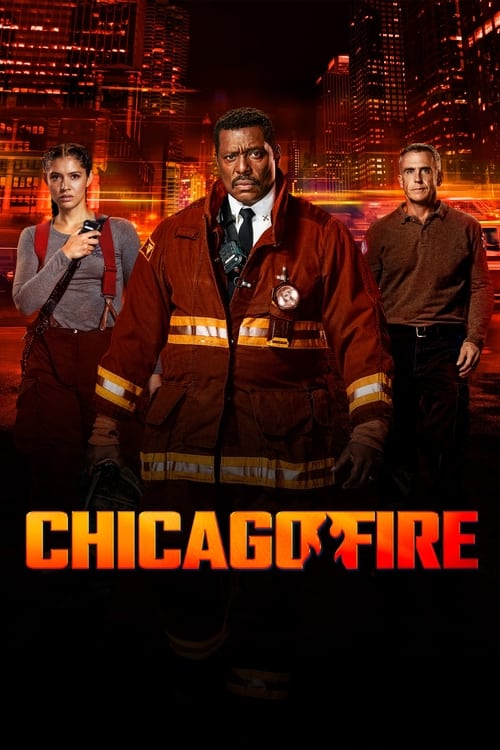
Chicago Fire
Season 12 Analysis
Season Overview
With fresh challenges and unexpected alliances, the crew leans into their unbreakable bond. In a city that never sleeps, Firehouse 51 stays ready — no matter what comes next.
Season Review
Categorical Breakdown
Firehouse 51 remains an ethnically and racially diverse workplace where characters of various backgrounds, including Chief Boden, Lieutenant Kidd, and Paramedic Mikami, hold positions of authority and expertise based on their merit. The main antagonist is an ambitious Paramedic Chief, and the conflict with the system is primarily a local power struggle and bureaucratic corruption, not a lecture on systemic oppression or the vilification of white identity.
The narrative consistently presents the institution of the fire department and the Firehouse 51 family as a source of order, heroism, and loyalty, positioning it as a shield against the chaos of city life. The characters exhibit a strong sense of duty to their city and a deep respect for their calling. There is no evidence of civilizational self-hatred or demonization of American heritage; the show reinforces institutional valor.
The score is elevated by the strong and competent female leads, Lieutenant Stella Kidd and Paramedic-in-Charge Violet Mikami. Kidd runs the 'Girls on Fire' program, which directly promotes female entry into the male-dominated field. Storylines involving married men like Cruz show their professional commitment directly conflicting with their wives' desire for them to reduce their hours for family balance. While male characters are not universally incompetent, the narrative leans toward celebrating female leadership and career fulfillment.
The character of Firefighter Darren Ritter, an already established firefighter, has an ongoing relationship with his male 'cop boyfriend' who is integrated into a plot point to assist the firehouse. This normalizes a non-traditional relationship within the heroic environment without the relationship being the central focus or a vehicle for lecturing on 'queer theory' or gender ideology. The parallel storyline of Brett's wedding and adoption strongly celebrates the traditional male-female pairing and nuclear family.
Religion is largely absent from the narrative, with the moral focus remaining on secular codes of conduct, duty, and public service ethics. No characters are depicted as villains or bigots due to their faith, and there is no explicit hostility toward or celebration of traditional religion, resulting in a low score that indicates the category is largely not addressed.