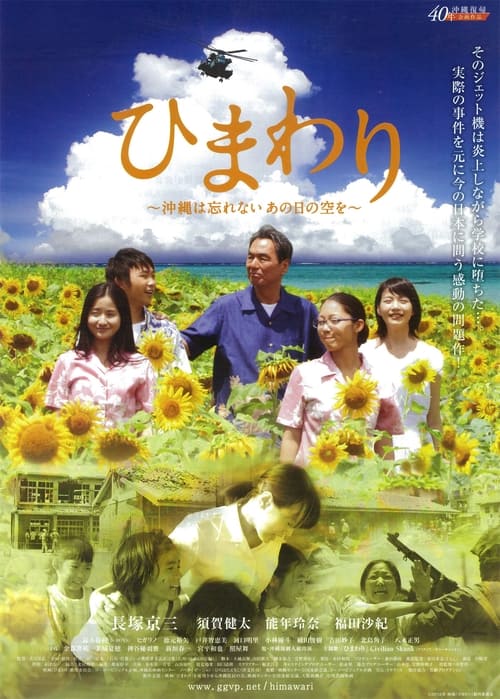
Himawari -Okinawa wa Wasurenai, Ano Nichi no Sora o-
Plot
After an American helicopter crashes into a classroom in Okinawa International University, student Ryuichi is compelled to write a report on a similar accident 52 years ago, in 1959, when an American jet fighter crashed into his grandfather's elementary school. He also plans to hold a peace concert.
Get the Weekly Woke Watchlist
New and trending movies scored for woke bias, preachy messaging, and forced political themes — before you waste your evening.
No spam. One useful email per week.
Overall Series Review
Categorical Breakdown
The narrative is driven by the intersectional hierarchy of power and identity, framing the local Okinawan population as victims of systemic oppression by the foreign American military presence. The entire plot functions as a lecture on this power dynamic, focusing on identity (nationality/geography) over individual character merit.
The central conflict presents the US military as a destructive, chaotic, and oppressive external force, responsible for fatal accidents and the violation of the local community’s peace. This demonizes the external Western-aligned military/political civilization and its role in the region.
The main plot focuses on a male student, Ryuichi, and his grandfather, who are investigating a political/historical tragedy. No plot elements or themes suggest the presence of 'Girl Boss' tropes, the emasculation of male characters, or anti-natalist messaging.
The film is a political and historical drama centered on military accidents and social activism. There is no evidence of centering alternative sexualities, deconstructing the nuclear family, or incorporating gender ideology.
The plot focuses on political and social themes (historical memory, peace, justice). Ancestral memory and respect for victims of the tragedy are likely thematic elements. There is no hostility toward religion or suggestion of moral relativism replacing an objective moral law.
Get the Weekly Woke Watchlist
New and trending movies scored for woke bias, preachy messaging, and forced political themes — before you waste your evening.
No spam. One useful email per week.