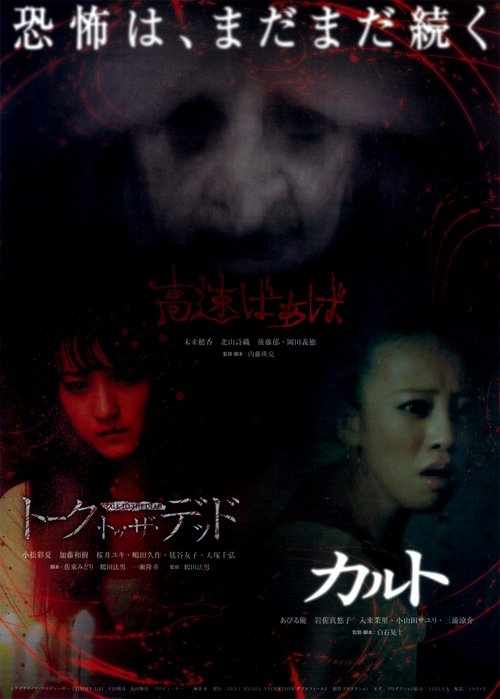
Cult
Plot
Three female idols appear on a television show to investigate an exorcism. An exorcist with psychic powers named Unsui claims that the show’s subjects, the Kaneda family, are cursed by a demon that’s too powerful for him to banish on his own, so he calls in a fellow exorcist to help. Soon, a reckless ghost hunter enters the fray as the three idols witness a series of terrifying events.
Get the Weekly Woke Watchlist
New and trending movies scored for woke bias, preachy messaging, and forced political themes — before you waste your evening.
No spam. One useful email per week.
Overall Series Review
Categorical Breakdown
The film is a Japanese production focused on Japanese characters and cultural context. The narrative's conflict is purely supernatural and cult-related, with no discernible themes of race, systemic oppression, or intersectional hierarchy. Character value is defined by competence in dealing with the paranormal threat.
The film critiques institutions, including the family (which is infiltrated and corrupted by the cult) and religious authorities, by showing them as inadequate against the supernatural threat. The narrative's skepticism suggests a crisis of belief in traditional structures and a sense of 'existential drift,' but this functions as internal horror deconstruction, not an outright vilification of the home culture or a celebration of foreign superiority.
The main characters are female idols, but they are consistently depicted as victims, witnesses, or bait, not as flawless 'Girl Boss' figures. A male character, the powerful psychic Neo, is introduced halfway through and serves as the primary force who effectively confronts and defeats the cult, despite his goofy appearance and rude demeanor. This structure is counter to the modern 'emasculation of males' trope.
The movie contains no themes, characters, or dialogue centering on alternative sexualities, gender identity, or queer theory. The central family unit targeted by the cult is the traditional mother-daughter structure. Sexuality is not a theme of the narrative.
Traditional religious authorities, such as a Shinto priest and Buddhist monks, are shown as ineffective or easily defeated by the supernatural threat. The film elevates a skeptical, postmodern, and self-proclaimed psychic named Neo who 'believes only in himself' as the only successful force against the ancient evil. This strongly suggests a critique of traditional faith as a failed source of strength and acknowledges a spiritual vacuum where only individualistic power can contend with objective evil.
Get the Weekly Woke Watchlist
New and trending movies scored for woke bias, preachy messaging, and forced political themes — before you waste your evening.
No spam. One useful email per week.