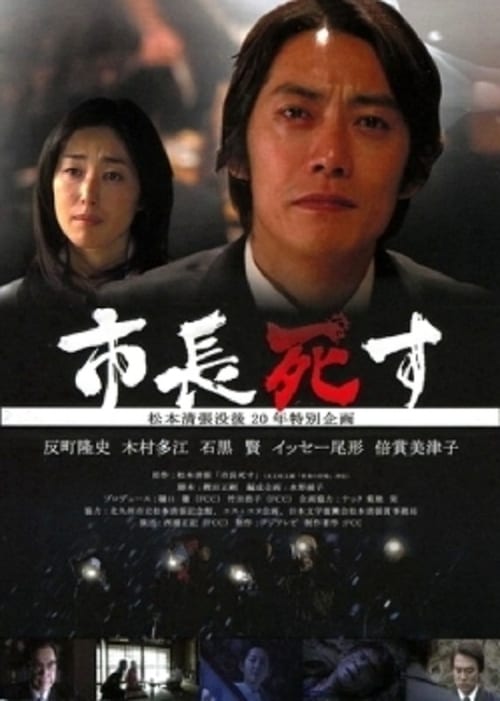
Shichou Shisu
Plot
The mayor is found dead in the river in a small town known for its hot springs. It's assumed that he fell to his death, but his nephew just cannot understand why his uncle would have gone there by himself to begin with. When he cleans up his house, he finds his uncle's diary and tries to find out what exactly happened.
Get the Weekly Woke Watchlist
New and trending movies scored for woke bias, preachy messaging, and forced political themes — before you waste your evening.
No spam. One useful email per week.
Overall Series Review
Categorical Breakdown
The film is a Japanese production set in Japan with an all-Japanese cast. The narrative relies on the protagonist’s personal conviction and investigative merit, focusing on the crime and corruption among local officials. There is no commentary on race, 'whiteness,' or a hierarchy of immutable characteristics.
The central conflict is a local scandal involving a mayor and hidden secrets in a Japanese town, a common trope in classic Japanese mystery. The critique is aimed at individual/political corruption, not a condemnation of Japanese culture, ancestors, or civilization as a whole. No external cultures are posited as morally superior.
The main investigator is a man, and the other main roles revolve around the mayor's death. Female characters, such as the love interest and the housekeeper, occupy traditional supporting roles that aid the male-led investigation. The narrative does not feature a 'Girl Boss' trope, male emasculation, or any messaging regarding anti-natalism or the superiority of career over motherhood.
The drama is a straightforward murder mystery from 2012. The narrative focuses on the investigation of the mayor's death, which is tied to political/personal secrets. The plot contains no centering of alternative sexualities, deconstruction of the nuclear family, or discussion of gender theory.
The film's focus is on a secular criminal and political investigation. The plot has no overt or underlying theme of hostility toward religion, specifically Christianity. Moral law is treated as an objective concept tied to justice and criminal wrongdoing rather than subjective power dynamics.
Get the Weekly Woke Watchlist
New and trending movies scored for woke bias, preachy messaging, and forced political themes — before you waste your evening.
No spam. One useful email per week.