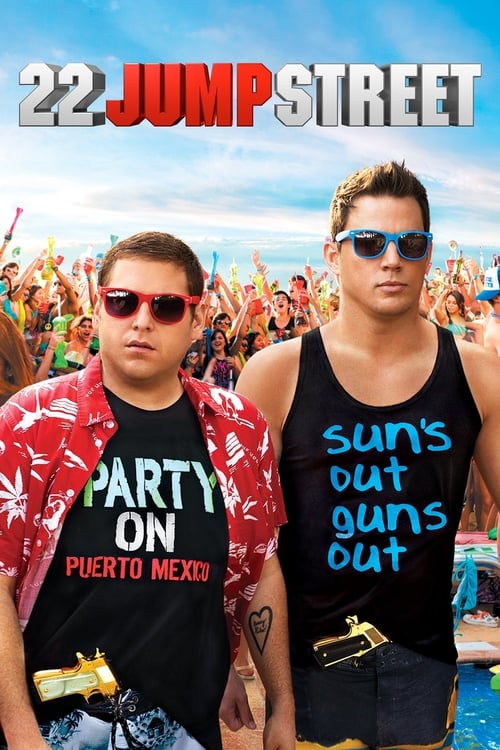
22 Jump Street
Plot
After making their way through high school (twice), big changes are in store for officers Schmidt and Jenko when they go deep undercover at a local college. But when Jenko meets a kindred spirit on the football team, and Schmidt infiltrates the bohemian art major scene, they begin to question their partnership. Now they don't have to just crack the case - they have to figure out if they can have a mature relationship. If these two overgrown adolescents can grow from freshmen into real men, college might be the best thing that ever happened to them.
Get the Weekly Woke Watchlist
New and trending movies scored for woke bias, preachy messaging, and forced political themes — before you waste your evening.
No spam. One useful email per week.
Overall Series Review
Categorical Breakdown
A recurring joke involves Schmidt, a white male, awkwardly attempting to demonstrate racial sensitivity through overcompensating and making inappropriate comments about race and victims, which is treated as a source of comedy. The character of Captain Dickson, a black male, is an angry, exaggerated authority figure. The core plot, however, does not lecture on systemic oppression but uses the intersectional lens for self-aware, satirical humor about political correctness itself. The main culprits are ultimately revealed to be white, with a black female villain as a secondary antagonist.
The movie does not express a hostility toward Western civilization, its home, or ancestors. The college setting, a Western institution, is satirized but is not framed as fundamentally corrupt or racist. The film is centered on an American, R-rated comedy aesthetic, focusing on an undercover operation, not civilizational deconstruction. The narrative offers no 'Noble Savage' trope.
The two male leads are depicted as bumbling, over-the-hill adolescents and incompetent undercover cops, fitting the trope of emasculated or bumbling men. However, the female villain, Mercedes, is not a 'Girl Boss' and is a genuine threat who is eventually defeated and subjected to a moment of comic physical violence from Schmidt. Female characters serve as a love interest, a villain, and a foil for the male leads' emotional drama, rather than being idealized as flawless 'Mary Sues.' The core emotional plot centers on the male partnership.
The entire central drama of the movie is the partnership between Jenko and Schmidt being framed as a romantic, dysfunctional couple, leading to a scene in 'couples therapy' and others mistaking them for gay, which centers alternative-style relationships. One of the main antagonists from the previous film is introduced with a crude running gag involving him having his genitals replaced with a 'makeshift vagina' in prison, which is played for crude, transphobic humor. Jenko does deliver a line chastising the use of a homophobic slur, creating a mixed message, but the narrative prominently features a non-traditional pairing as its emotional core.
The film has a pagan, materialistic worldview focused on sex, drugs, and profanity. It contains brief borderline jokes that use a 'dancing Vietnamese Jesus' as part of a drug-induced hallucination, and mentions of various Christian church icons, which treats the sacred with mockery and profanation. Morality is subjective and driven by the comedic and chaotic situations the characters find themselves in, not a transcendent moral law. The movie operates entirely outside of any religious framework.
Get the Weekly Woke Watchlist
New and trending movies scored for woke bias, preachy messaging, and forced political themes — before you waste your evening.
No spam. One useful email per week.