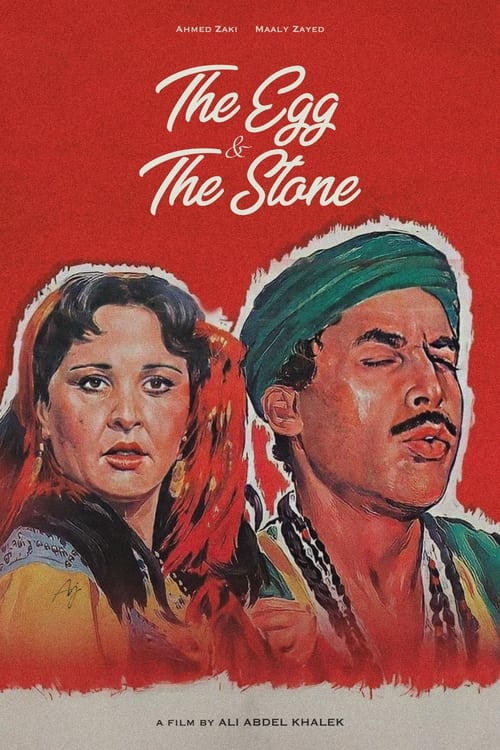
The Egg and the Stone
Plot
A philosophy teacher finds himself and his ethics surrounded by a corrupt society, and as he's mistaken for an exorcist and fortune-teller. He uses logic and psychological tricks to practice wizardry, until he masters it and controls people, meanwhile losing his ethics.
Get the Weekly Woke Watchlist
New and trending movies scored for woke bias, preachy messaging, and forced political themes — before you waste your evening.
No spam. One useful email per week.
Overall Series Review
Categorical Breakdown
The movie is a social critique focused on class (the nouveau riche) and the ethical corruption of the main character. The conflict rests on the character's moral choices and a corrupt system, not on race, immutable characteristics, or intersectional hierarchy. The cast is locally authentic and the film is not concerned with the vilification of 'whiteness.'
The narrative is an internal critique of the contemporary social and economic corruption within its own Egyptian society. The focus is on the failure of modern ethics and systems, not on demonizing ancestors or framing the home culture as fundamentally corrupt in a broader civilizational self-hating context. It aims for social introspection rather than civilizational rejection.
The plot centers entirely on the moral journey and downfall of the male protagonist, the philosophy teacher. Given the film's 1990 Egyptian origin and central themes, there is no evidence of 'Girl Boss' tropes, anti-natalism, or the emasculation of men as core narrative elements. Gender dynamics are secondary to the ethical and class commentary.
The film’s setting (1990 Egypt) and plot (philosophy, wizardry, and corruption) do not allow for the presence of the contemporary 'Queer Theory Lens.' Alternative sexualities, deconstructing the nuclear family, or gender ideology are not themes addressed in the story.
The movie critiques the main character's cynical practice of using logic to impersonate a 'fortune-teller' or 'exorcist,' which functions as a sharp critique of superstition, charlatanism, and the moral vacuum that allows a society to be exploited. It targets the *abuse* of spiritual belief for power and wealth, as well as moral relativism, but does not present traditional religion as the root of all evil or demonize faithful characters.
Get the Weekly Woke Watchlist
New and trending movies scored for woke bias, preachy messaging, and forced political themes — before you waste your evening.
No spam. One useful email per week.