Nightmare
Plot
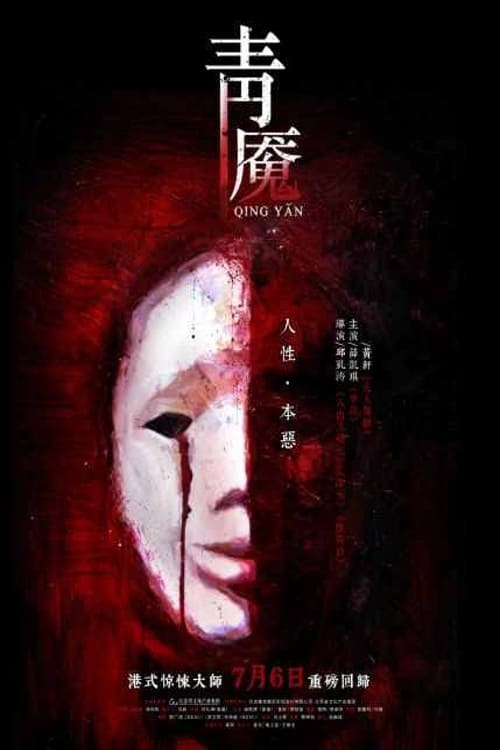
Hao Dong suffers from insomnia. One night he sees his neighbour across the street getting murdered. But when he arrives at the scene to investigate, the body has disappeared and the apartment turns out to be vacant. His girlfriend Yifan believes lack of sleep is playing tricks on his mind. Then he is witness to yet another murder, this time in his hometown of Nine Mile Village, and once again he appears to have imagined it all. Or is there something more going on? Does Hao Dong’s childhood in Nine Mile Village hold the key to this mystery?
Get the Weekly Woke Watchlist
New and trending movies scored for woke bias, preachy messaging, and forced political themes — before you waste your evening.
No spam. One useful email per week.
Overall Series Review
Categorical Breakdown
The movie is a Chinese production with an entirely Chinese cast, focusing on a personal murder mystery and psychological distress. There is no presence of 'race-swapping,' vilification of 'whiteness,' or a narrative that relies on Western intersectional hierarchy or political lecturing. Character conflicts are purely based on the mystery and the protagonist's mental state.
The plot involves a trip back to the protagonist's depressed hometown, Nine Mile Village, to uncover a buried truth. The presence of a 'run-down ancestral hall' is part of the setting and the mystery, not a demonization of cultural heritage. The movie's focus is on solving a local crime, not on promoting hostility toward Western civilization or deconstructing Chinese heritage.
The female lead, Yifan, is a successful, professional psychologist and radio host who actively tries to diagnose and help her distressed male partner, Hao Dong, through his breakdown and the mystery. She functions as a rational problem-solver and a source of stability, not a bumbling or toxic figure. While this shows the female character in a highly competent role in contrast to the male lead's distress, it presents a complementary, adult relationship where one partner helps the other, rather than a clear 'Girl Boss' trope used to lecture on gender dynamics or vilify masculinity.
The narrative centers on a traditional male-female relationship between the protagonist and his psychologist girlfriend. The plot is strictly focused on a psychological mystery and murder. There is no presence or discussion of alternative sexualities, deconstruction of the nuclear family, or gender ideology, aligning with a normative structure and keeping sexuality private.
As a Chinese psychological thriller, the film must navigate strict censorship rules which often mandate that any supernatural elements, such as ghosts or hauntings, must ultimately be explained as repressed memory, mental illness, or scientific phenomena. This reliance on a secular, psychological explanation minimizes the role of any traditional faith and implies a subjective reality, but it is an artifact of the production environment, not an ideological attack on 'Traditional religion,' especially Christianity, which is not a central cultural element of the film.
Get the Weekly Woke Watchlist
New and trending movies scored for woke bias, preachy messaging, and forced political themes — before you waste your evening.
No spam. One useful email per week.